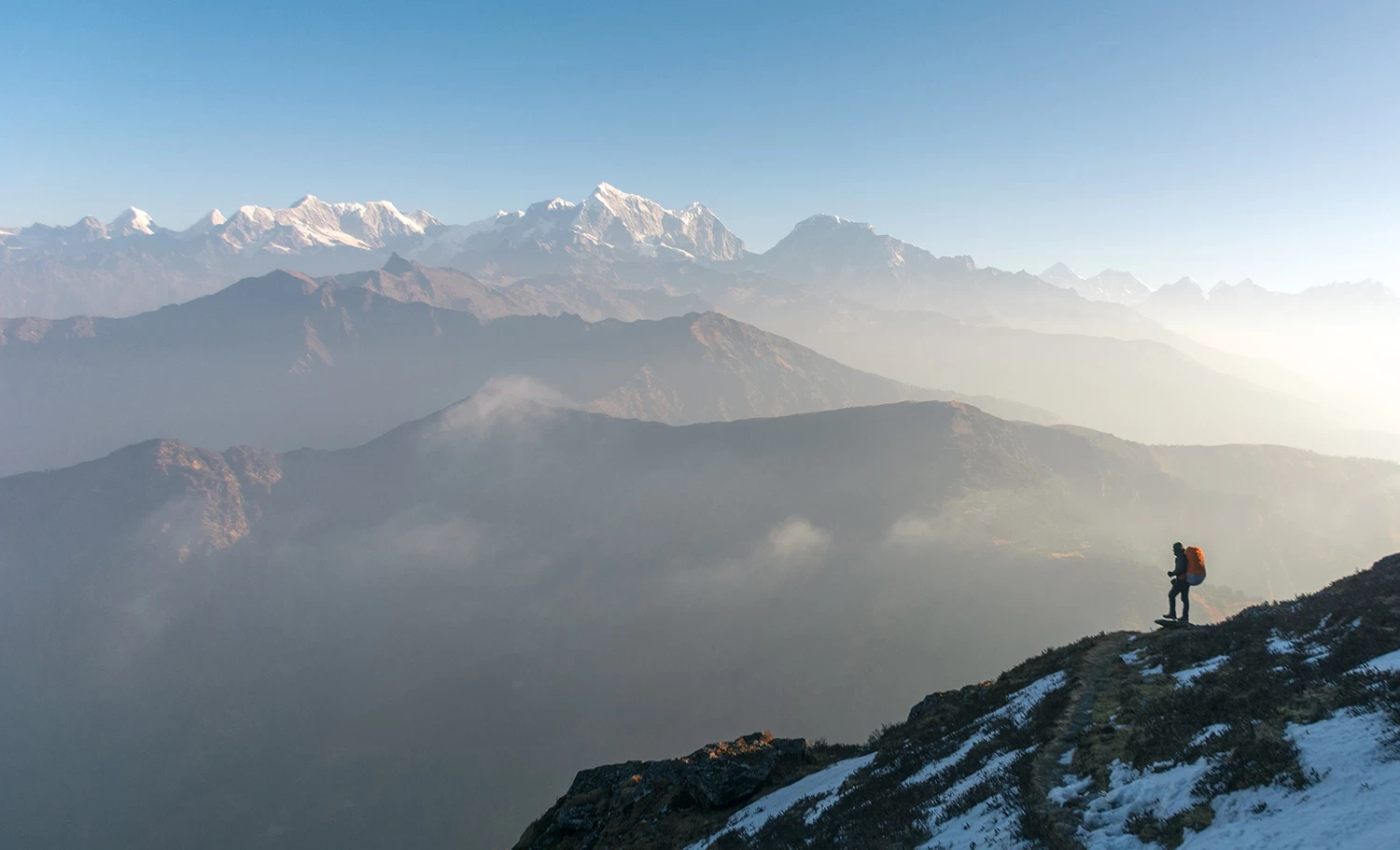
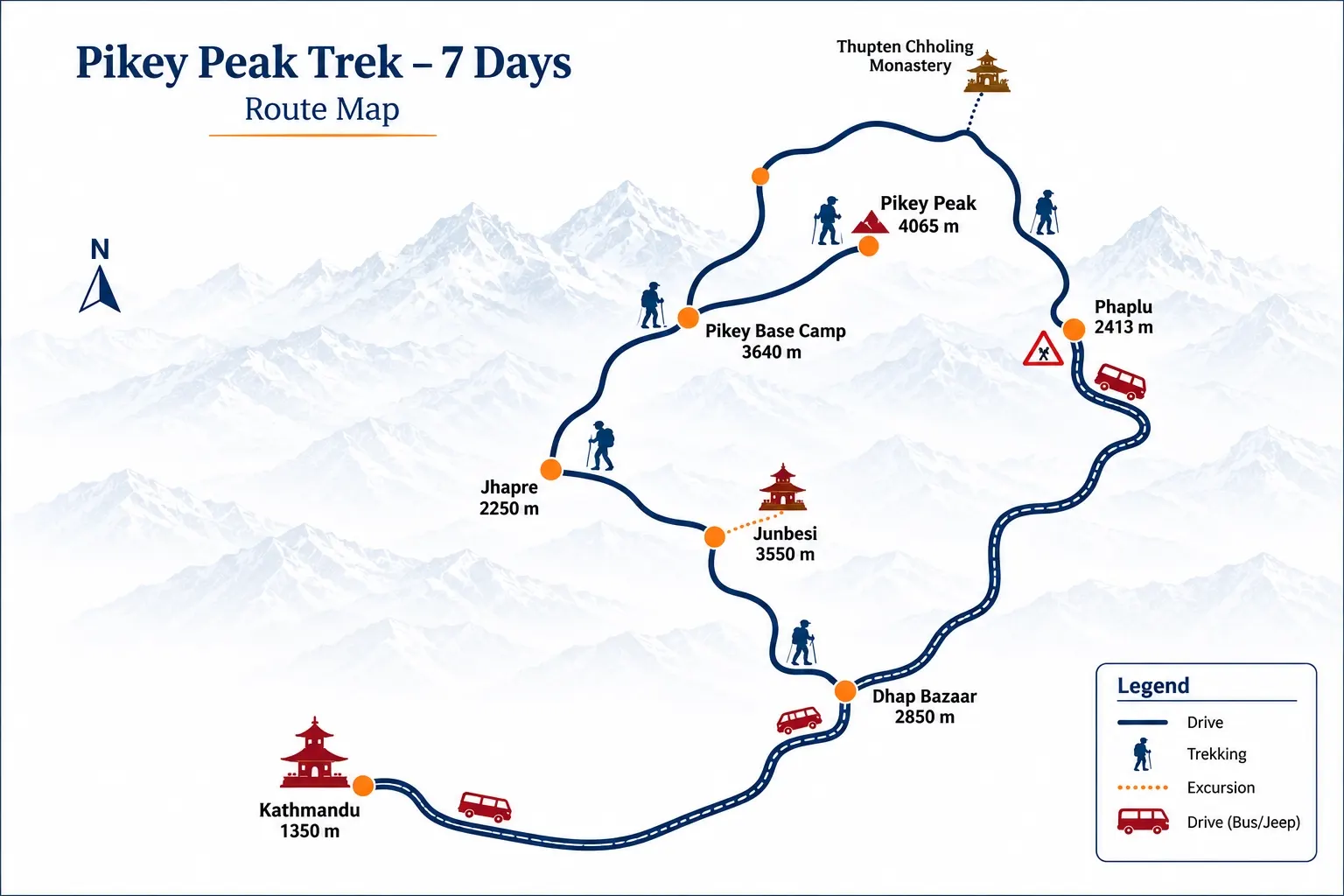
The Pikey Peak Trek is a spectacular short Himalayan adventure in Nepal’s Lower Everest region, offering breathtaking panoramic views of some of the world’s highest mountains. Reaching Pikey Peak at 4,065 meters, the trek is particularly famous for its stunning views of Mount Everest, Lhotse, Makalu, Manaslu, and Gaurishankar, as well as the surrounding Himalayan ranges. Starting from the scenic village of Dhap at approximately 2,850 meters, the trail winds through peaceful forests, terraced fields, picturesque mountain settlements, and open ridges, providing a refreshing alternative to Nepal’s busier trekking routes.
Beyond its natural beauty, the Pikey Peak Trail offers a wonderful opportunity to experience the traditional culture and hospitality of the Sherpa and Tamang communities. Along the journey, trekkers encounter ancient Buddhist monasteries, colorful prayer flags, peaceful stupas, chortens, and stone mani walls that reflect the deep spiritual heritage of the Himalayas. Staying in traditional teahouses and local lodges allows travelers to enjoy warm hospitality, delicious home-cooked meals, and authentic interactions with local families while discovering the unique lifestyle and traditions of communities living in the shadow of the Everest range.
The Pikey Peak Trek usually takes around 6–7 days, depending on the itinerary and transportation arrangements, with the trek offering flexible options to finish at Junbesi Village or Phaplu Bazar. Although the trail reaches above 4,000 meters, it is considered a moderate trek and does not require technical climbing experience. Some sections involve steady uphill climbs and changes in elevation, so a good level of fitness and proper acclimatization are important. The combination of manageable trekking days, diverse landscapes, cultural experiences, and spectacular mountain scenery makes Pikey Peak an excellent choice for both experienced trekkers and travelers looking for their first rewarding Himalayan adventure.
The best time for the Pikey Peak Trek in Nepal is generally during spring (March to May) and autumn (September to November), when the weather is more stable, skies are clearer, and Himalayan visibility is usually excellent. Spring brings colorful rhododendron forests, while autumn offers crisp mountain air and magnificent views of the surrounding peaks. From peaceful forest trails and traditional Sherpa villages to the unforgettable sunrise panorama from Pikey Peak Summit, this trek offers an authentic and less-crowded Himalayan experience. For travelers seeking Everest views, Sherpa culture, beautiful mountain landscapes, and a short yet rewarding trek in Nepal, the Pikey Peak Trek is an exceptional choice.