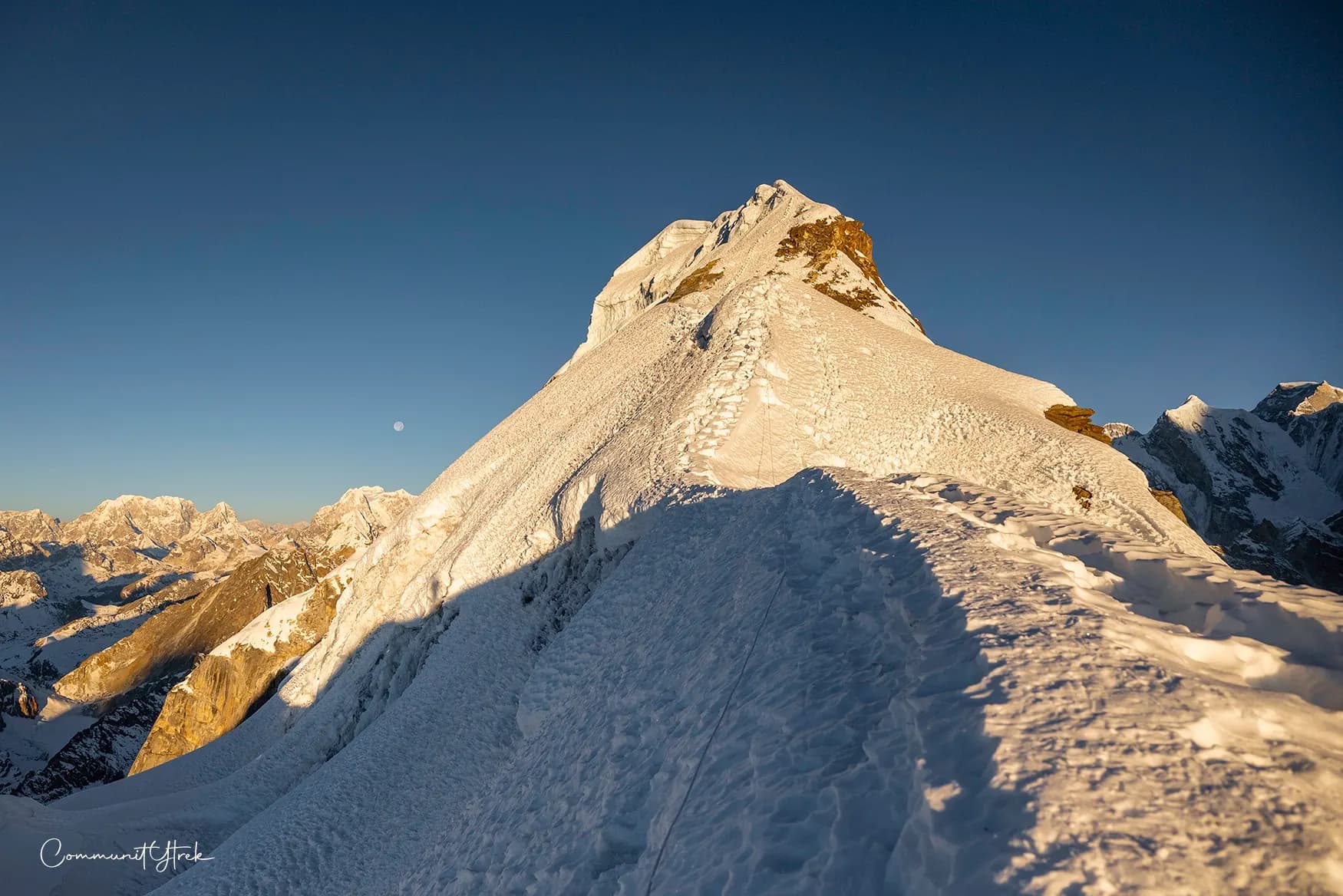
Standing at 6,119 meters (20,075 feet) above sea level, Lobuche East is one of Nepal's most popular trekking peaks in the Everest region. It offers something that attracts many adventure travelers: the chance to go beyond ordinary trekking and experience a real Himalayan summit without taking on an expedition as demanding as Everest. The mountain lies close to Lobuche village and the Khumbu Glacier, and the normal climbing journey follows the famous Everest Base Camp trail before turning toward the peak. (Trekking Agencies' Association of Nepal)
For many people, Lobuche Peak Climbing is the next step after trekking. You spend several days walking through the Khumbu, acclimatizing around Namche Bazaar and Dingboche, seeing Everest and other giant peaks, and eventually sleeping in a tent at high camp before making an early-morning summit attempt. That combination of trekking, altitude and basic mountaineering makes Lobuche East exciting, but it should never be treated as an easy hike.
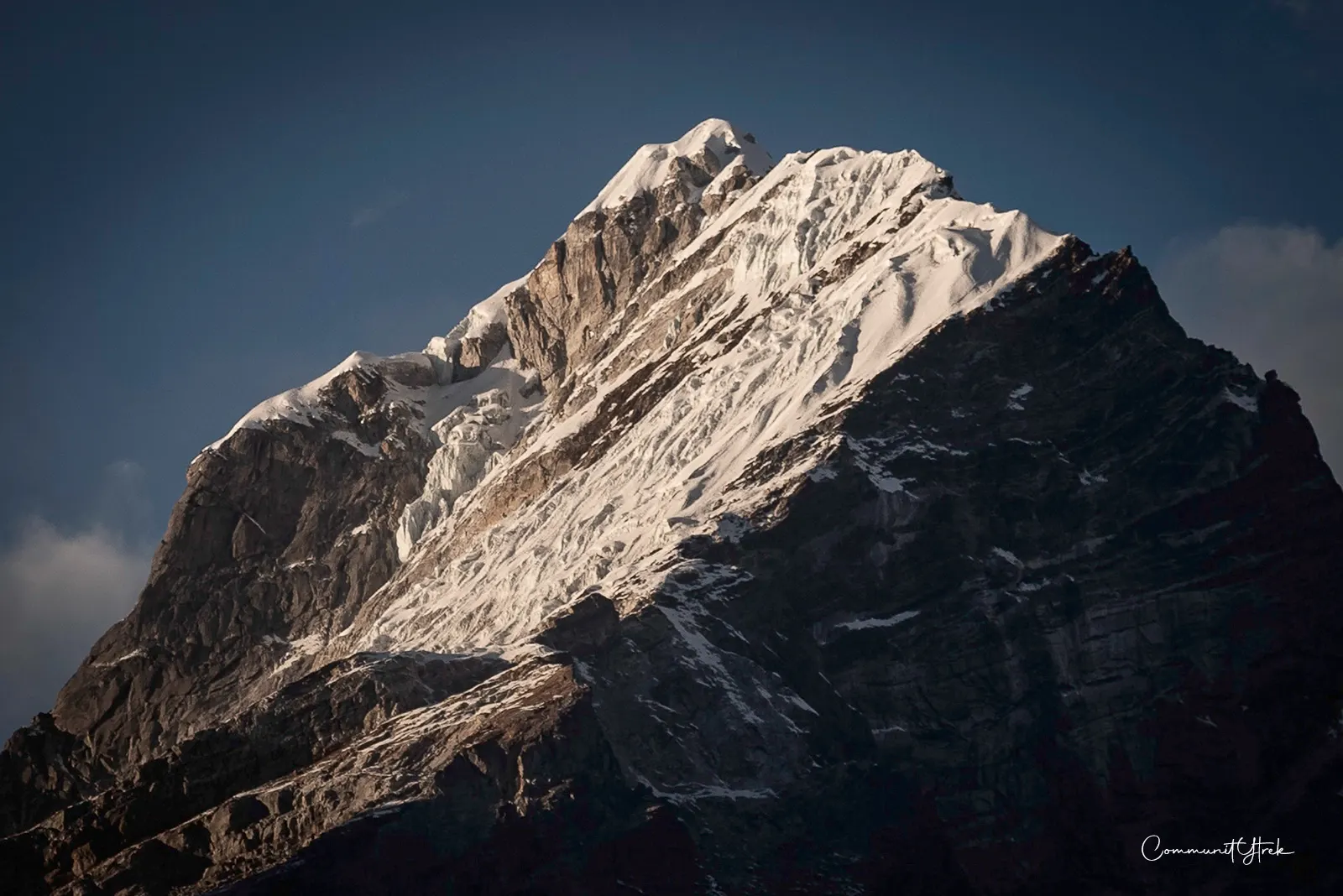
What Is Lobuche Peak?
Lobuche is actually a mountain with two principal peaks: Lobuche East and Lobuche West. Lobuche East is approximately 6,119 meters high and is the peak most commonly attempted by commercial trekking and peak-climbing groups. Lobuche West is higher, around 6,135 meters according to current NMA listings, and is treated separately from the trekking peak.
Lobuche East is located in Nepal's Khumbu region, close to the Everest Base Camp trekking route. Its position is one of its biggest attractions because climbers can combine the peak with the classic Everest journey rather than traveling to a completely separate mountain region. The approach passes through famous Sherpa settlements and provides views of some of the world's highest mountains before the actual climbing begins.
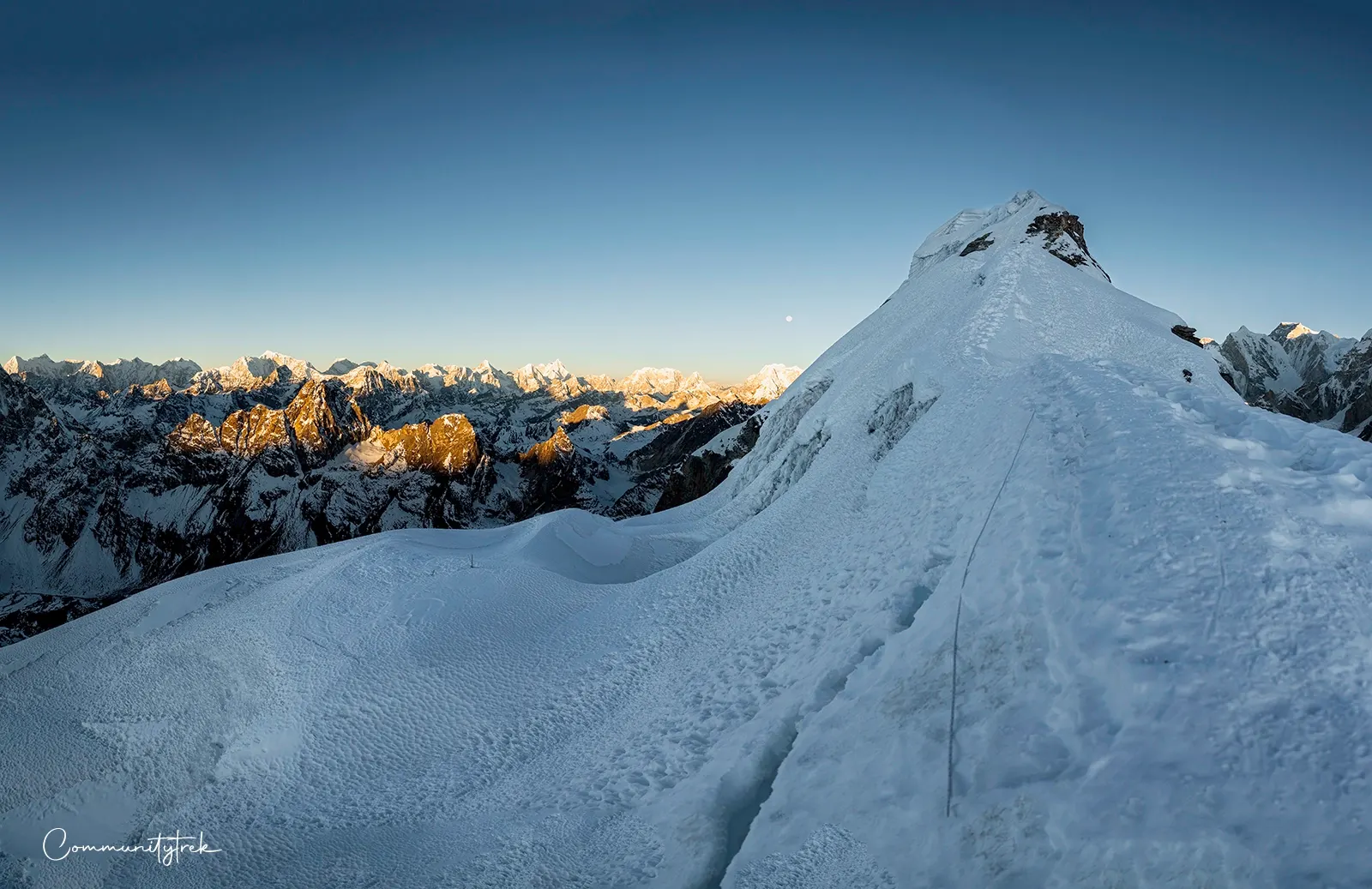
How High Is Lobuche East?
The summit of Lobuche East is 6,119 meters (20,075 feet) high. At this elevation, the lack of oxygen becomes a serious part of the challenge. The mountain is not difficult simply because of its height; the combination of altitude, cold, steep snow and ice, long summit days and changing weather makes the final climb considerably more demanding than a normal trek.
This is why a good itinerary does not rush from Lukla to the summit. The days spent walking through Namche, Dingboche and the upper Khumbu are important for acclimatization. Your body needs time to adjust before you ask it to perform at more than 6,000 meters.
Why Do Ordinary Travelers Choose Lobuche Peak?
The appeal of Lobuche East is that it sits at an interesting point between trekking and mountaineering. A traveler who has completed high-altitude treks may want a greater challenge, but may not be ready to commit to a major expedition. Lobuche provides an opportunity to learn and use basic climbing techniques while experiencing the high Himalayas.
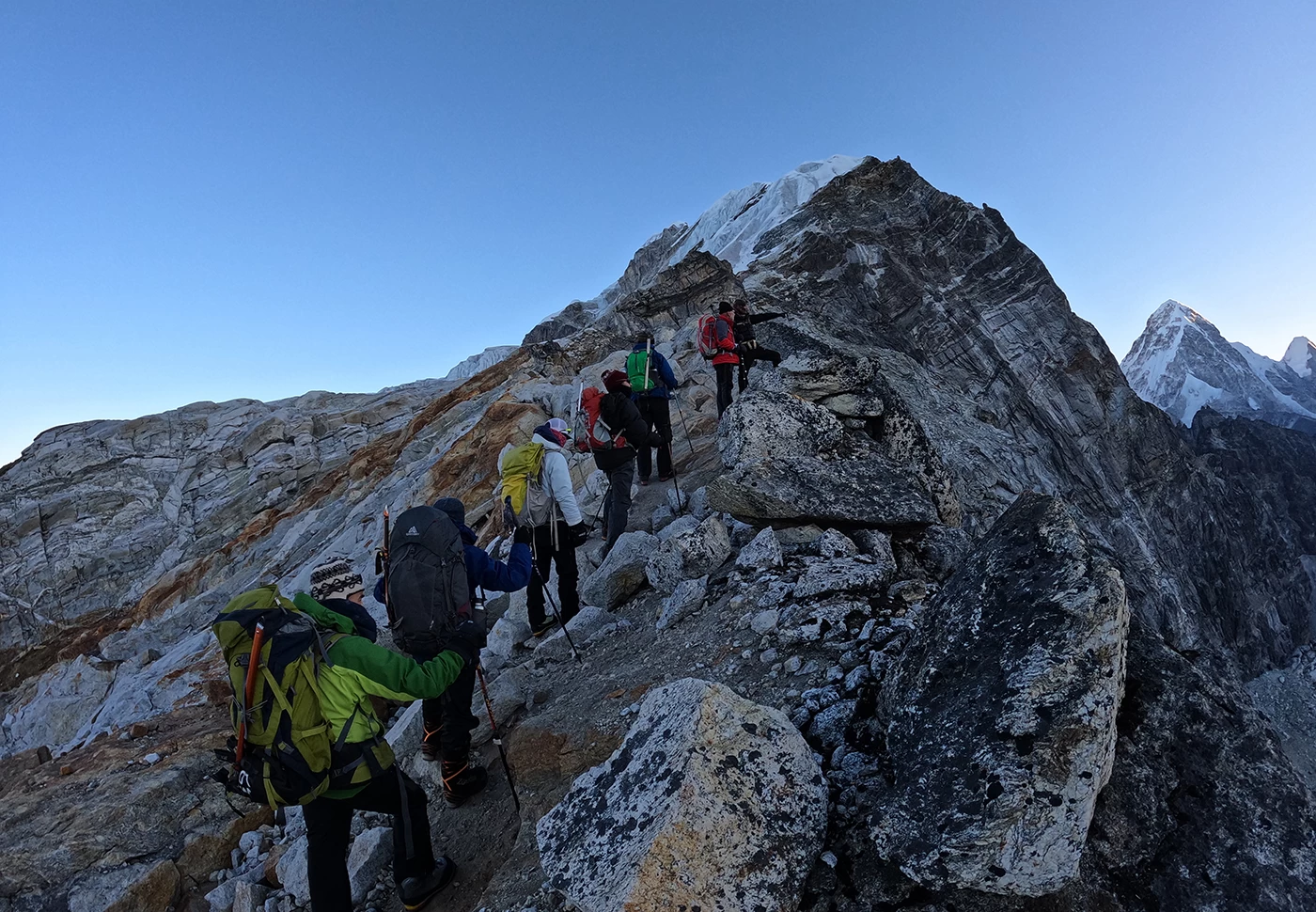
Another reason people choose it is the setting. The approach takes you through the Everest region, so the trip itself is already a major Himalayan adventure. You can walk through Namche Bazaar, Tengboche, Dingboche and Lobuche, see Everest Base Camp and then turn your attention toward the summit. The mountain thereWalking along the rugged rocky trail toward Lobuche Peak.fore feels like an extension of the Everest experience rather than a completely separate trip.
There is also the simple attraction of standing on a 6,000-meter Himalayan summit. Reaching Lobuche East requires much more preparation than reaching Everest Base Camp, and that extra challenge gives the journey a very different sense of achievement.
How Difficult Is Lobuche Peak Climbing?
Lobuche East is generally considered a challenging trekking peak, and it is one of the more technical objectives within Nepal's trekking-peak category. The normal climb involves steep snow and ice terrain, and climbers need to be comfortable using equipment such as crampons, harnesses, ropes, an ice axe and an ascender when required by the route and climbing team.
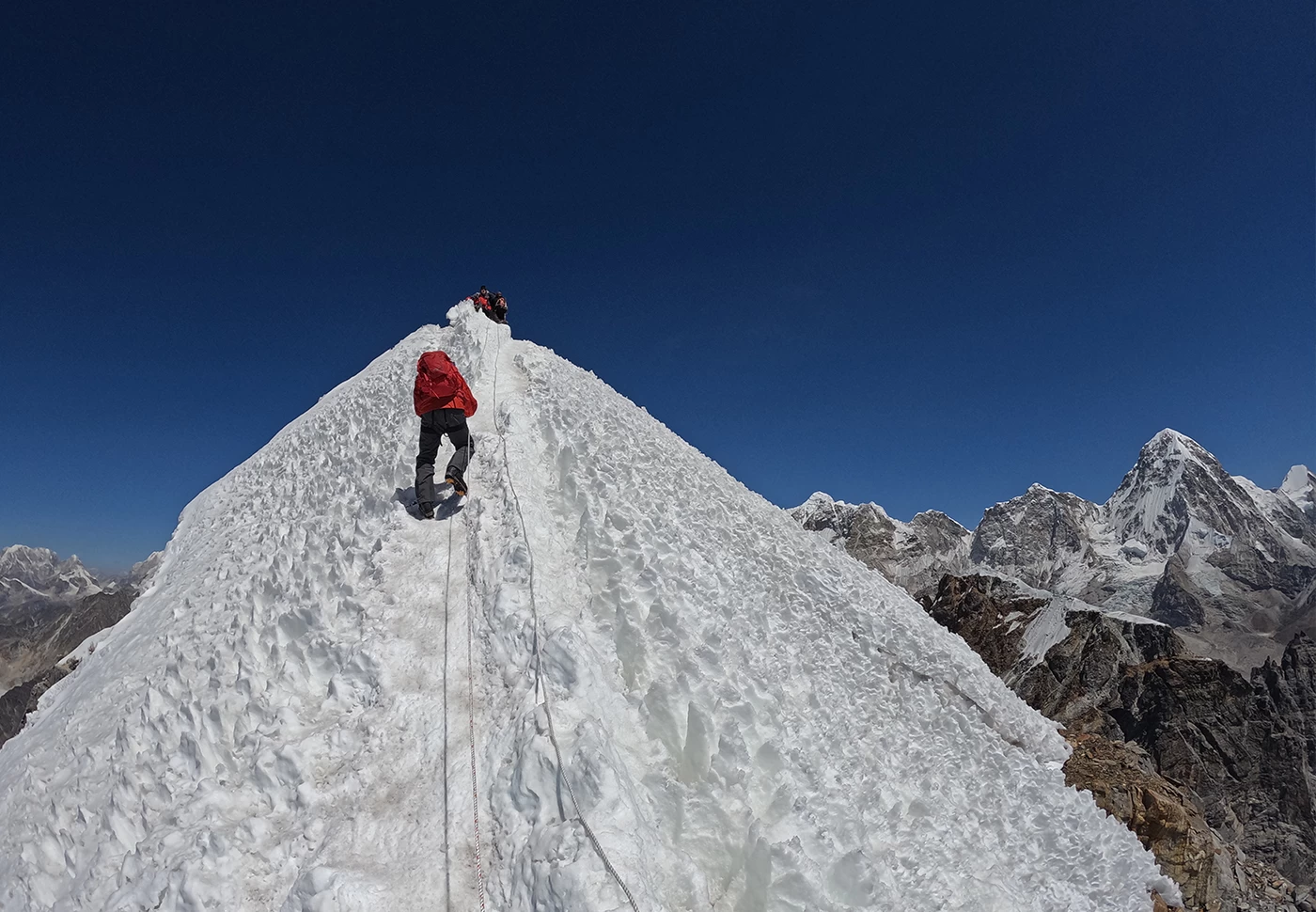
The physical challenge begins well before summit day. You may spend several hours walking every day at altitude, and the elevation continues to increase as you move toward Lobuche and high camp. The summit attempt is particularly demanding because it combines an early start, cold temperatures, thin air and steep climbing.
A fit trekker with appropriate preparation and professional climbing support may be able to climb Lobuche East without being an experienced mountaineer, but previous high-altitude trekking experience is a major advantage. The mountain should not be described as a beginner-friendly walk. It is a genuine climbing objective that deserves serious preparation.
What Are the Main Challenges?
Altitude is the first major challenge. At 6,119 meters, oxygen availability is significantly lower than at sea level, and even strong trekkers can become exhausted quickly. Acclimatization therefore matters as much as physical fitness.
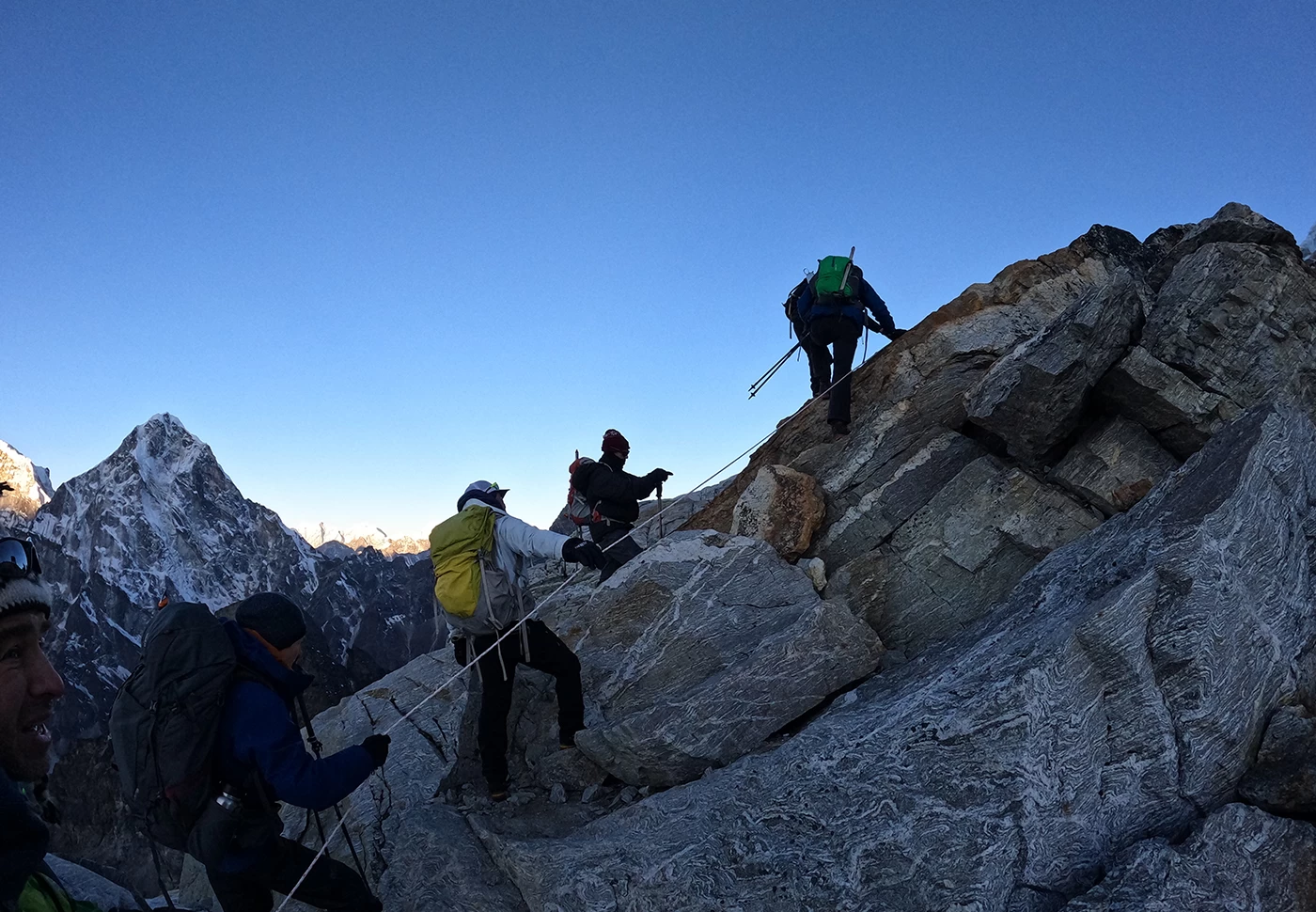
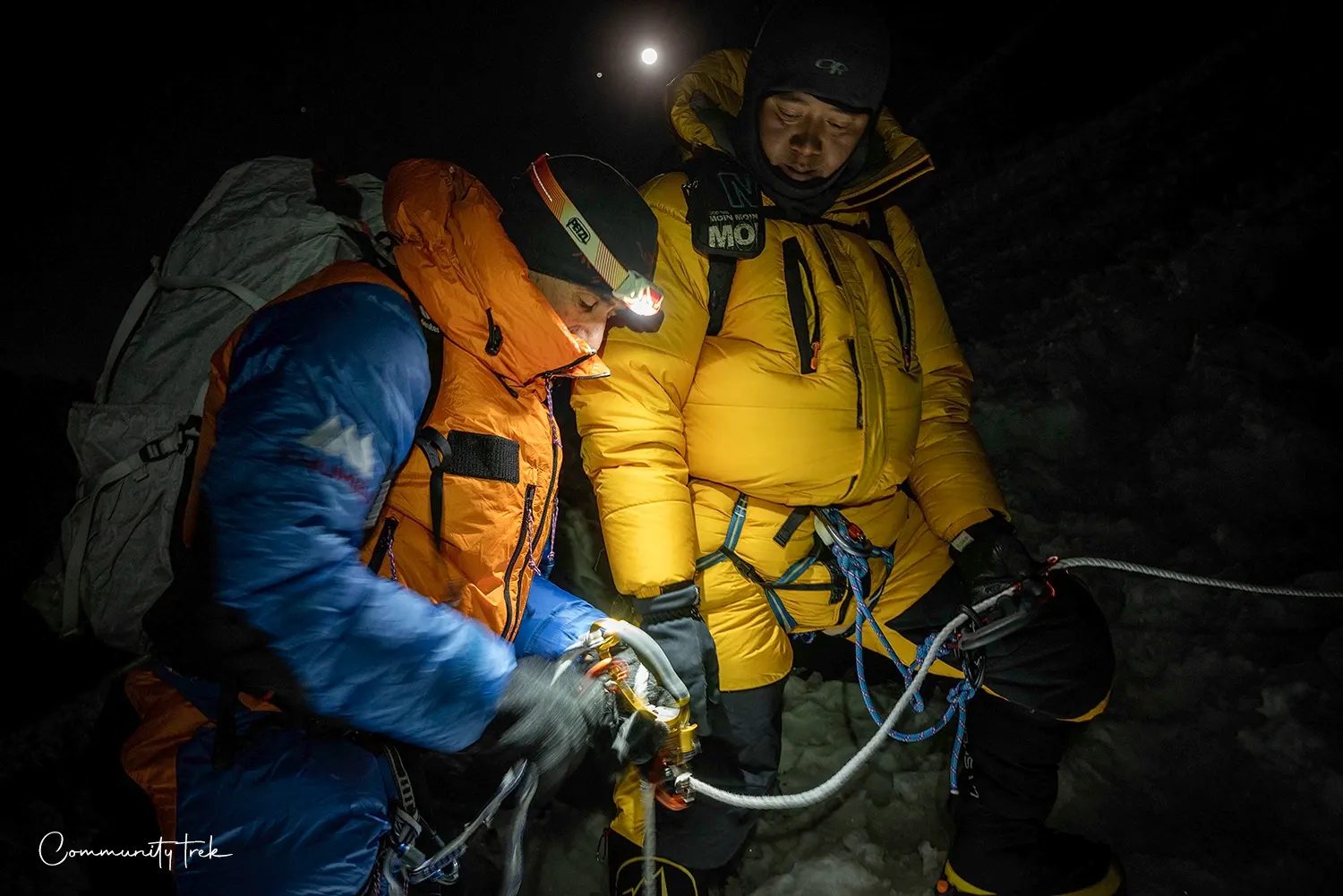
The summit day is another major challenge. Climbers normally leave high camp very early, often during the night, so they can take advantage of colder and more stable conditions and have enough time for the ascent and descent. Walking and climbing in darkness with a headlamp, followed by hours of movement at high altitude, requires both physical and mental endurance.
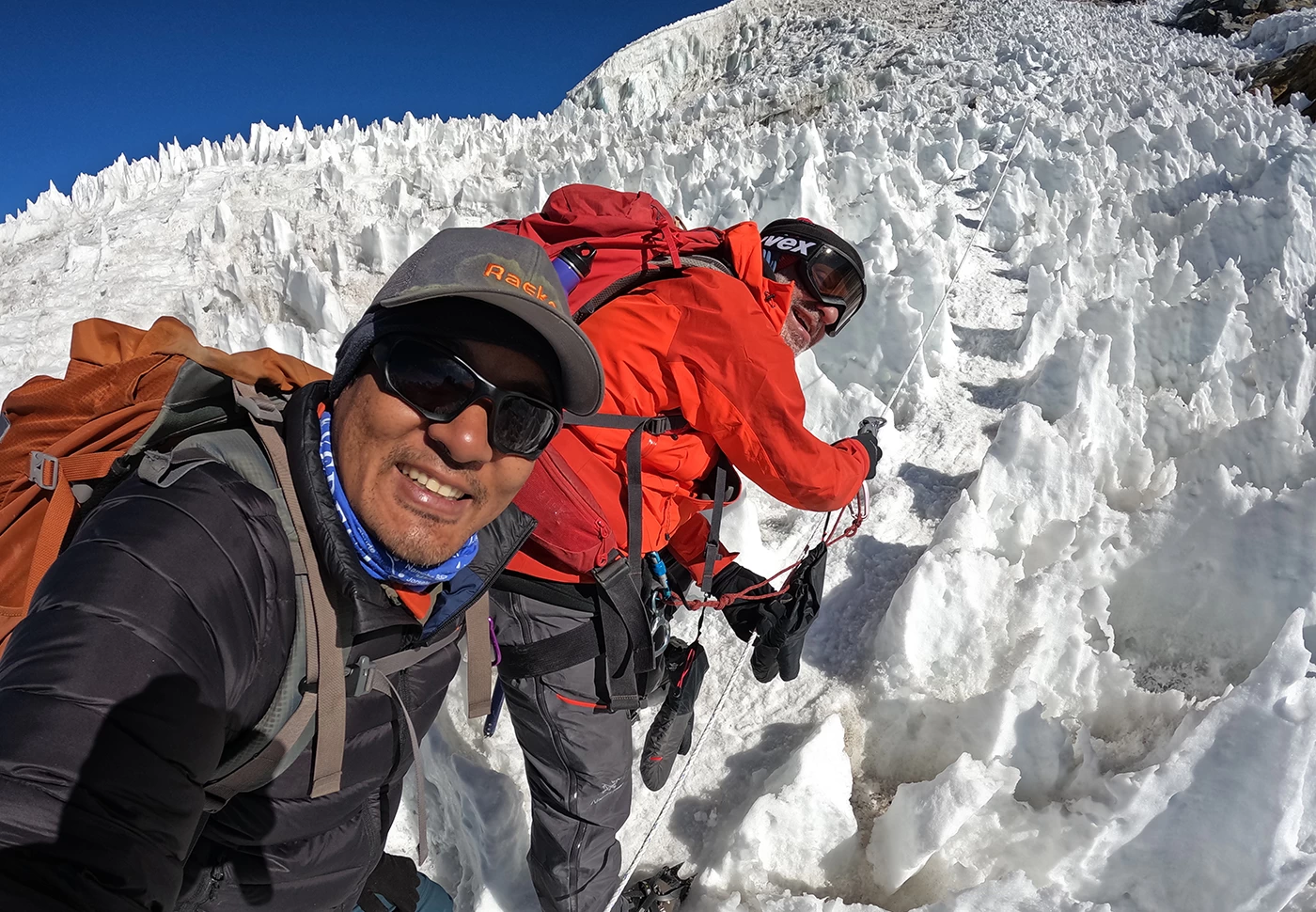
The terrain also becomes more technical. Depending on current route conditions, climbers may encounter snow and ice slopes requiring crampons, ropes and other mountaineering equipment. A qualified climbing guide should make decisions about the safest route and equipment based on the actual conditions.
Finally, there is Himalayan weather. Conditions can change quickly, particularly at high elevation. A strong climbing plan needs flexibility, which is why an extra weather or contingency day is often worth having.
Where Is Lobuche Peak Located?
Lobuche East lies in the Khumbu region of northeastern Nepal, near Lobuche village and the Khumbu Glacier. The mountain is positioned along the Everest trekking corridor, which makes access relatively straightforward compared with more remote Nepalese peaks.
The normal approach from Lukla passes through Phakding, Namche Bazaar, Tengboche, Dingboche and Lobuche before reaching the climbing area. This gradual approach is useful not only for reaching the mountain but also for acclimatization.
How Do You Get to Lobuche Peak?
Most international climbers begin in Kathmandu and travel to Lukla, usually by flight when operating conditions allow. From Lukla, the journey continues on foot through the Khumbu Valley.
The trek normally passes through Phakding and Namche Bazaar before continuing toward Tengboche and Dingboche. After further acclimatization, you continue toward Lobuche village and the climbing area. A typical climbing itinerary then includes time for preparation and acclimatization around base camp or high camp before the summit attempt.
Lukla flights are weather-sensitive, so it is sensible to leave buffer days in your overall Nepal itinerary. A flight delay can otherwise affect an entire climbing schedule.
Short Lobuche Peak Climbing Itinerary
There are many ways to organize Lobuche Peak, and the exact number of days depends on acclimatization, whether you include Everest Base Camp, weather and the climbing team's strategy. The following is a representative itinerary, not a fixed schedule.
| Day | Route | Approx. Altitude | Distance / Time | Main Activity |
|---|---|---|---|---|
| 1 | Kathmandu | 1,400 m | — | Arrival and preparation |
| 2 | Kathmandu → Lukla → Phakding | 2,610 m | ~7–8 km / 3–4 hrs | Flight and trek |
| 3 | Phakding → Namche Bazaar | 3,440 m | ~10–12 km / 5–6 hrs | Trek through Sherpa villages |
| 4 | Namche acclimatization | 3,440 m | ~3–5 hrs | Acclimatization hike |
| 5 | Namche → Tengboche | 3,860 m | ~10 km / 5–6 hrs | Monastery and mountain views |
| 6 | Tengboche → Dingboche | 4,410 m | ~11 km / 5–6 hrs | Trek through the upper Khumbu |
| 7 | Dingboche acclimatization | 4,410 m | ~3–5 hrs | Acclimatization hike |
| 8 | Dingboche → Lobuche | 4,940 m | ~11 km / 5–6 hrs | Continue toward Everest |
| 9 | Lobuche → Everest Base Camp → Lobuche | ~5,364 m at EBC | ~14–16 km / 7–9 hrs | Everest Base Camp excursion |
| 10 | Lobuche → Climbing Base Camp | ~4,940 m | ~4–6 hrs | Climbing preparation |
| 11 | Acclimatization / climbing training | Varies | Varies | Crampon, rope and equipment practice |
| 12 | Base Camp → High Camp | ~5,700–5,800 m | ~4–6 hrs | Climb and sleep in tent |
| 13 | High Camp → Lobuche East Summit → descend | 6,119 m | ~10–14 hrs | Summit attempt |
| 14 | Contingency / weather day | Varies | — | Extra summit opportunity if required |
| 15 | Descend toward lower Khumbu | Varies | 5–7 hrs | Recovery and descent |
| 16 | Trek toward Lukla | 2,860 m | 5–7 hrs | Return trek |
| 17 | Lukla → Kathmandu | 1,400 m | — | Flight and end of trek |
The itinerary above is intentionally not rushed. A shorter schedule may look attractive on paper, but at this altitude, acclimatization and flexibility are more important than saving one or two days.
Important Altitudes on the Lobuche Peak Journey
| Location | Approx. Elevation |
|---|---|
| Kathmandu | 1,400 m |
| Lukla | 2,860 m |
| Namche Bazaar | 3,440 m |
| Tengboche | 3,860 m |
| Dingboche | 4,410 m |
| Lobuche Village | 4,940 m |
| Everest Base Camp | ~5,364 m |
| Lobuche High Camp | ~5,700–5,800 m, depending on camp location |
| Lobuche East Summit | 6,119 m |
Elevations and camp locations can vary slightly depending on the route and current climbing conditions.
What Is Lobuche High Camp Like?
Lobuche High Camp is where the experience begins to feel much more like mountaineering than trekking. Instead of staying in a comfortable teahouse, climbers normally sleep in tents at high altitude. Facilities are basic, the temperature can drop sharply after sunset, and there is little opportunity for comfort.
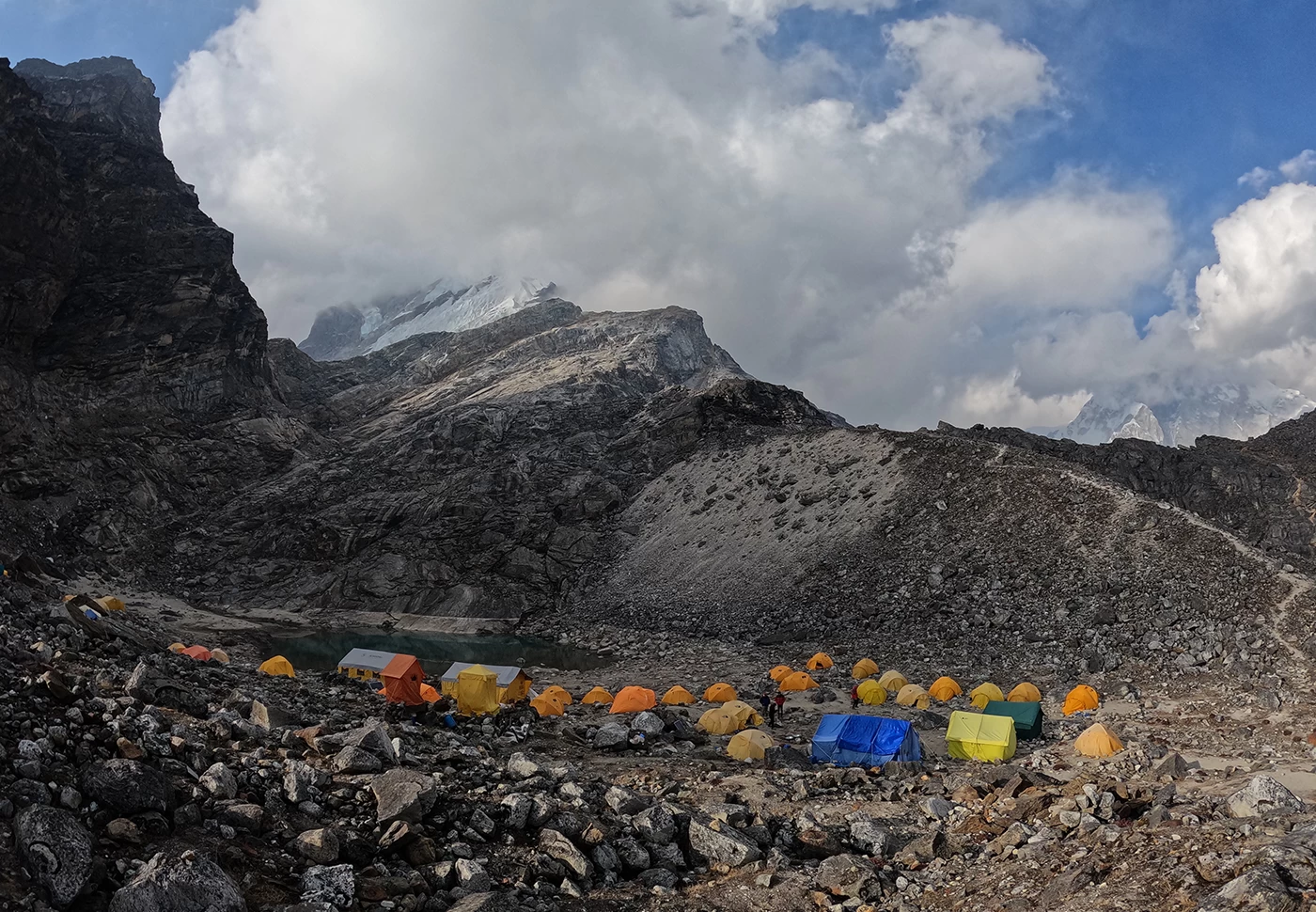
The purpose of staying at high camp is practical: it places you closer to the summit so that the climbing team can begin the summit attempt very early. After eating a simple meal and preparing equipment, climbers usually try to sleep as much as possible before waking for the ascent.
A night at high camp can be uncomfortable, but it is also one of the moments that makes Lobuche memorable. You are surrounded by the high Himalayas, your climbing equipment is ready beside you and the next objective is the summit.
What Is Summit Day Like?
Summit day is normally the hardest day of the entire trip. Climbers leave high camp very early, often around midnight or during the early hours of the morning, depending on weather, route conditions and the guide's plan.
The first part of the climb may take place in darkness, so a reliable headlamp is essential. As daylight arrives, the surrounding peaks begin to appear, but the excitement of the scenery is mixed with the reality of climbing at more than 5,000 meters.
The final ascent can involve steep snow and ice, and the use of fixed ropes or other climbing systems may be required depending on the route conditions. The exact technical setup can change from season to season, so climbers should follow their guide's instructions rather than assuming the mountain will look exactly like photographs from previous years.
After reaching the summit, the work is not finished. Descending safely is equally important, especially when fatigue is high. A successful Lobuche climb means reaching the summit and returning safely to lower altitude.
What Permits Do You Need for Lobuche Peak?
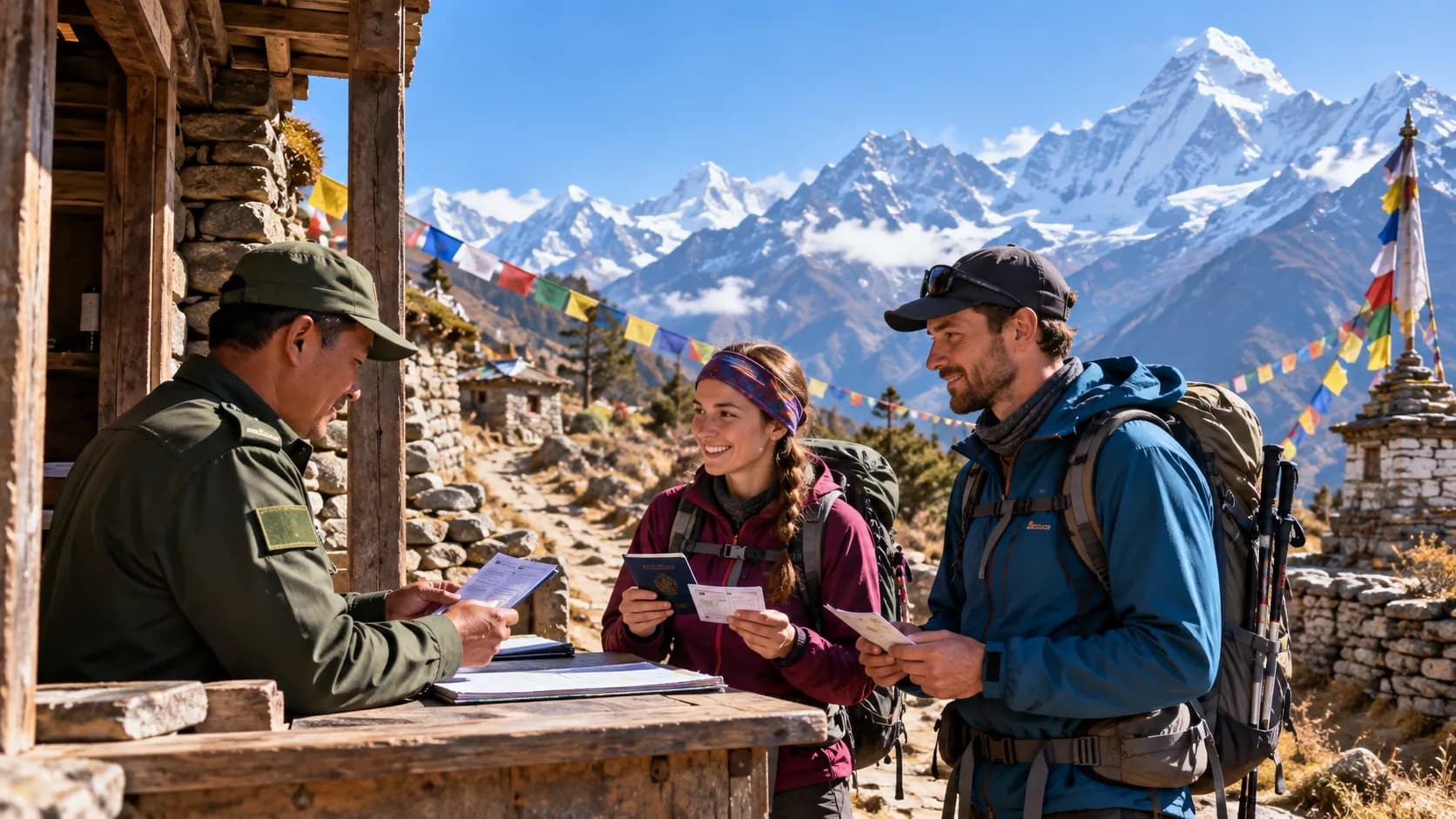
Lobuche East requires a climbing permit, in addition to the permits and registrations needed for traveling through the Everest region. Current trekking-peak fee information lists Lobuje at 6,119 meters, with the foreign-climber climbing fee shown as USD 250 in spring, USD 125 in autumn and USD 70 in winter and summer.
You should also expect the applicable Sagarmatha National Park entry permit and local Khumbu entry requirements, as well as any current trekking registration/TIMS requirements applicable to your itinerary. These fees and regulations can change, so your trekking agency should verify the current requirements before your departure.
Do not confuse the Lobuche East permit with Lobuche West. The two peaks are separate climbing objectives and are treated differently in Nepal's peak-climbing system.
Do You Need a Guide for Lobuche Peak?
For a serious peak-climbing trip, professional climbing support is strongly recommended. A climbing guide is not simply someone who knows the walking trail; they should understand high-altitude climbing, rope systems, crampon technique, weather decisions, altitude management and emergency procedures.
Your guide can also decide whether conditions are safe enough to continue toward the summit. This is especially important because the mountain can look manageable from photographs while conditions on the actual climbing route may be very different.
Before booking, ask your agency who will lead the climbing section, what qualifications and experience the guide has, what equipment is included and what emergency arrangements are in place.
How Much Does Lobuche Peak Climbing Cost?
The total cost depends heavily on whether you join a group or take a private trip, how many days you spend in the mountains, whether Everest Base Camp is included, what equipment you need to rent and what services your agency provides.
For planning purposes, a complete Lobuche East climbing trip from Kathmandu commonly falls into a roughly USD 2,000–4,000+ range, depending on the itinerary and level of service. This is a planning estimate rather than a government-set price; premium private expeditions can cost more, while tightly organized group trips may cost less.
| Cost Category | Typical Planning Range | Notes |
|---|---|---|
| Climbing permit | USD 70–250 | Depends on season; current published fee schedule |
| National park & local permits | Varies | Depends on current government/local fees |
| Guide / climbing support | Varies | Depends on group size and service |
| Porter | Varies | Usually depends on days and load |
| Lukla flights | Varies | Weather and season affect prices |
| Teahouse accommodation | Varies | Usually included in packages |
| High Camp tent | Usually package-based | Basic tent accommodation |
| Food & drinks | Varies | Higher prices at higher elevations |
| Climbing equipment | Varies | Rental can reduce upfront cost |
| Insurance | Varies | Must cover high-altitude climbing |
| Tips | Personal choice/customary | Depends on service |
| Emergency reserve | Recommended | Keep money available for delays or changes |
The most important thing is to compare what is included, rather than comparing package prices alone. A very cheap climbing package may exclude important equipment, guide services, permits, transportation or emergency support.
What Equipment Do You Need?
You do not necessarily need to purchase every piece of climbing equipment yourself. Many agencies provide or arrange technical equipment, while climbers bring their own personal clothing and footwear.
| Equipment | Bring or Arrange | Purpose |
|---|---|---|
| Mountaineering boots | Personal / rental | Protection and compatibility with crampons |
| Crampons | Agency / rental | Grip on snow and ice |
| Harness | Agency / rental | Rope protection |
| Ice axe | Agency / rental | Snow and ice climbing |
| Helmet | Agency / rental | Head protection |
| Ascender/Jumar | Agency / rental | Fixed-rope climbing where required |
| Down jacket | Personal | High-altitude insulation |
| Thermal layers | Personal | Warmth |
| Waterproof shell | Personal | Protection from snow and wind |
| Warm gloves | Personal | Cold protection |
| Sunglasses/goggles | Personal | Protection from snow glare and wind |
| Sleeping bag | Personal / rental | Essential for cold nights |
| Headlamp | Personal | Early-morning summit climb |
| Trekking poles | Personal | Approach and descent |
| Water bottles | Personal | Hydration |
| First-aid/medicine | Personal | Personal health needs |
Always confirm the equipment list with your climbing agency before leaving Kathmandu because the exact technical requirements depend on the current route and conditions.
Where Do You Sleep During Lobuche Peak Climbing?
For most of the approach, you stay in teahouses and lodges along the Everest Base Camp route. These provide simple rooms, shared dining areas and basic facilities, although comfort decreases as you climb higher.
At high camp, the experience changes completely. You sleep in a tent, usually with a sleeping bag and basic camping equipment. There may be very limited toilet and washing facilities, and charging electronics can be difficult or unavailable.
This is part of the reality of climbing Lobuche. The final stage is not a comfortable lodge-to-lodge trek; it is a short high-altitude mountaineering experience.
What Is the Best Time to Climb Lobuche Peak?
The best periods are generally spring and autumn, when weather and climbing conditions are more favorable.
| Season | Months | General Conditions | Recommendation |
|---|---|---|---|
| Spring | March–May | Generally favorable; good climbing window | Excellent |
| Summer/Monsoon | June–August | Rain and cloud lower down; less favorable overall | Avoid for most climbers |
| Autumn | September–November | Generally clear and stable | Excellent |
| Winter | December–February | Very cold, snow and difficult conditions | For experienced climbers |
April–May and October–November are particularly attractive for most travelers. Spring can provide excellent mountain conditions and autumn often brings clearer post-monsoon skies.
Even during the best season, however, the summit is never guaranteed. Weather, snow conditions and the climbing route can change quickly.
Lobuche Peak vs Everest Base Camp
Lobuche Peak and Everest Base Camp are not really competing experiences; they are two different levels of adventure.
| Feature | Lobuche Peak | Everest Base Camp |
|---|---|---|
| Main objective | Summit a 6,119 m peak | Reach Everest Base Camp |
| Technical climbing | Yes | No technical climbing required |
| Difficulty | Challenging | Challenging trek |
| Altitude | 6,119 m summit | ~5,364 m at EBC |
| Equipment | Mountaineering equipment required | Trekking equipment |
| High Camp | Tent accommodation | Normally teahouse |
| Summit attempt | Early-morning climbing | No summit climb |
| Best for | Trekkers wanting a climbing challenge | Travelers wanting the classic Everest experience |
If reaching Everest Base Camp is your main dream, the standard trek may be enough. But if you want to take the next step and experience an actual Himalayan summit, Lobuche East offers a much more demanding adventure.
Who Should Climb Lobuche Peak?
Lobuche East is best suited to travelers who are physically fit, comfortable with long days in the mountains and prepared to learn basic mountaineering techniques. Previous high-altitude trekking experience is helpful because the body must already be accustomed to walking and sleeping at significant elevation.
A person without previous climbing experience may still be able to attempt Lobuche with proper training and an experienced climbing team, but they should not arrive expecting the mountain to be a simple extension of the Everest Base Camp trek.
The most important qualities are fitness, patience, preparation and respect for altitude. You do not need to be an elite athlete, but you do need to take the mountain seriously.
How Should You Prepare for Lobuche Peak?
Preparation should begin well before you arrive in Nepal. Regular hiking is one of the best ways to prepare because it trains both your legs and your ability to walk for several hours. Cardiovascular training, stair climbing and strength exercises can also help you handle long days at altitude.
If possible, practice walking with a backpack and spend time on steep terrain. Before the actual climb, your guide or climbing agency should also provide or review basic techniques for using crampons, an ice axe, harness and fixed ropes.
Mental preparation matters too. Summit day can be long and uncomfortable, and there may be moments when the mountain feels much harder than expected. Being willing to move slowly, listen to your guide and turn around when conditions become unsafe is part of responsible climbing.
Altitude Sickness and Safety
Altitude should be taken seriously on every Lobuche Peak trip. Headache, nausea, dizziness, unusual tiredness and other symptoms can occur as you ascend. Severe symptoms can become life-threatening, so climbers should immediately tell their guide if they feel unwell.
The best protection is a sensible itinerary with proper acclimatization and gradual ascent. Do not try to prove your fitness by climbing too quickly.
Travel insurance is also extremely important. Make sure your policy specifically covers high-altitude trekking and peak climbing to the elevation of Lobuche East, as ordinary travel insurance may exclude mountaineering. Emergency evacuation coverage should also be checked carefully before departure.
Why Is Lobuche Peak Worth Climbing?
The best part of Lobuche is that the summit is only one piece of the story. You spend days walking through the Khumbu, passing Buddhist monasteries and Sherpa villages, watching the mountains grow larger and gradually adapting to the altitude. By the time you reach Lobuche, the landscape already feels completely different from the world you left behind in Kathmandu.
Then comes high camp. You eat a simple meal, crawl into a tent and try to sleep while knowing that you will soon be climbing toward a 6,119-meter summit. When you finally leave in the darkness, the mountains are almost invisible except for the narrow beam of your headlamp.
As the sun rises, the Himalayas slowly appear around you. The cold, fatigue and thin air make every step feel significant. Reaching the summit is not simply about taking a photograph; it is the result of everything you have done during the days before it.
That is why ordinary travelers choose Lobuche Peak. It gives you the chance to experience the Everest region not only as a trekker, but as a climber.
Is Lobuche Peak Right for You?
If you are looking for an easy extension to Everest Base Camp, Lobuche is probably not the right choice. The mountain demands more preparation, better equipment and greater physical and mental commitment.
But if you have a strong interest in the Himalayas, enjoy challenging trekking and want to experience your first serious peak climb, Lobuche East can be an excellent objective. The combination of Everest-region trekking, acclimatization, technical climbing and a 6,119-meter summit makes it one of the most attractive introductory climbing experiences in Nepal.
The key is to approach it with respect. Lobuche is achievable for a well-prepared climber, but it is not easy—and that is exactly what makes reaching the summit meaningful.
Frequently Asked Questions About Lobuche Peak Climbing
How high is Lobuche Peak?
Lobuche East is 6,119 meters (20,075 feet) high. It is one of Nepal's popular trekking peaks in the Khumbu region.
Is Lobuche Peak difficult?
Yes. Lobuche East is a challenging peak involving high altitude, long summit days, cold conditions and technical snow and ice climbing. It requires more preparation than a normal Everest Base Camp trek.
Can beginners climb Lobuche Peak?
A beginner with good physical preparation and professional climbing support may be able to attempt Lobuche East, but previous high-altitude trekking experience is highly beneficial. It should not be treated as an easy beginner hike.
How much does Lobuche Peak Climbing cost?
A complete trip commonly requires a budget of roughly USD 2,000–4,000 or more, depending on the itinerary, agency, group size, equipment, guide services and included facilities. The climbing permit itself is only one part of the total cost.
How much is the Lobuche Peak climbing permit?
Current published trekking-peak fee information lists the Lobuje/Lobuche permit for foreign climbers at USD 250 in spring, USD 125 in autumn and USD 70 in winter or summer. Always confirm the latest fee before booking.
Do you need a guide to climb Lobuche Peak?
Professional climbing support is strongly recommended, and travelers should verify the current Nepal regulations and agency requirements before booking. A qualified climbing guide is particularly important for rope work, technical equipment, route decisions, altitude management and emergencies.
How many days does Lobuche Peak Climbing take?
A typical Kathmandu-to-Kathmandu itinerary can take around 15–18 days, depending on acclimatization, Everest Base Camp visits, weather and the climbing schedule. Some itineraries are shorter or longer.
Where do you sleep on Lobuche Peak?
Most of the trekking section uses teahouses, while the high-altitude climbing section normally involves tent accommodation at high camp before the summit attempt.
What is the best month to climb Lobuche Peak?
April, May, October and November are generally among the best months, with spring and autumn offering more favorable climbing conditions. Weather can still change rapidly, so summit success is never guaranteed.
Is Lobuche Peak harder than Everest Base Camp?
Yes, generally. Everest Base Camp is a high-altitude trek, while Lobuche East involves an actual summit climb with technical equipment and a summit elevation of 6,119 meters. The physical and technical demands are therefore higher.
Can you combine Everest Base Camp with Lobuche Peak?
Yes. Many itineraries combine the Everest Base Camp trek with Lobuche East because the mountain lies close to the established Everest trekking route. This allows travelers to experience both Everest Base Camp and a Himalayan summit in one journey.
Final Thoughts
Lobuche Peak Climbing is not simply about adding another destination to an Everest itinerary. It changes the character of the entire journey. You begin as a trekker, walking through the Khumbu and gradually adapting to the altitude, but as you approach the mountain you start learning how to move safely on snow and ice and prepare for a real summit attempt.
The night at high camp, the early start under a dark Himalayan sky and the long climb toward 6,119 meters are what separate Lobuche from an ordinary trek. The mountain asks for preparation and patience, but in return it offers a genuine taste of Himalayan mountaineering.
For travelers who dream of standing on a Himalayan summit but are not yet ready for a major expedition, Lobuche East can be an exciting and achievable first step, provided it is approached with proper training, acclimatization, equipment and professional guidance.