What to Eat in Nepal: A Traveler’s Guide to Local Cuisine
Nepal is famous around the world for its Himalayas, trekking trails, ancient temples, and warm hospitality. But there is another part of Nepal that deserves just as much attention: its food.
From a steaming plate of dal bhat after a day in the mountains to freshly prepared momos in a busy Kathmandu street, food in Nepal is closely connected with everyday life, family, festivals, geography, and culture.
Because Nepal is home to many different ethnic communities and regions, its food is wonderfully diverse. Newari and Thakali cuisines are particularly distinctive, while Nepali cooking also reflects influences from neighboring India and Tibet.
So, if you are planning your first trip to Nepal, don't just see Nepal, taste it too.
Why You Should Try Nepali Food
One of the best ways to understand a country is through its food. In Nepal, recipes and eating traditions change as you travel from the Kathmandu Valley to the hills, Terai, and high Himalayan regions.
The everyday Nepali meal is traditionally based around dal, bhat, tarkari, and achar, lentils, rice, vegetables, and pickle. But that's only the beginning. You will also find dumplings, fermented foods, traditional breads, noodles, meat dishes, sweets, and regional specialties.
For travelers, this means almost every day can bring something new to taste.
1. Dal Bhat | The Taste of Everyday Nepal
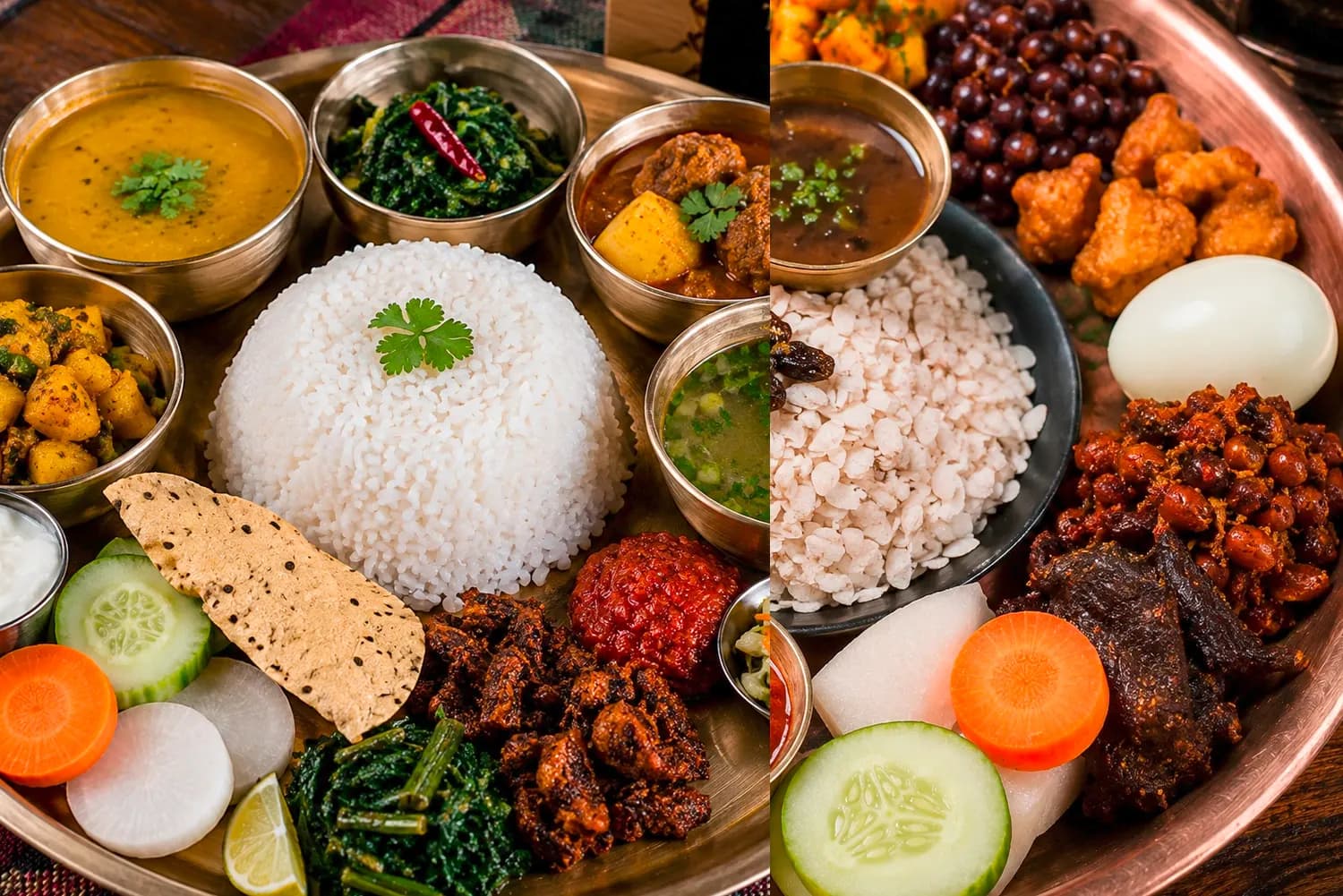
If there is one Nepali food every traveler should try, it is Dal Bhat, also widely served as a Nepali Set or Thakali Set. While the exact ingredients and style vary by region and restaurant, the heart of the meal remains the same: rice, lentil soup, vegetables, pickles, and flavorful side dishes.
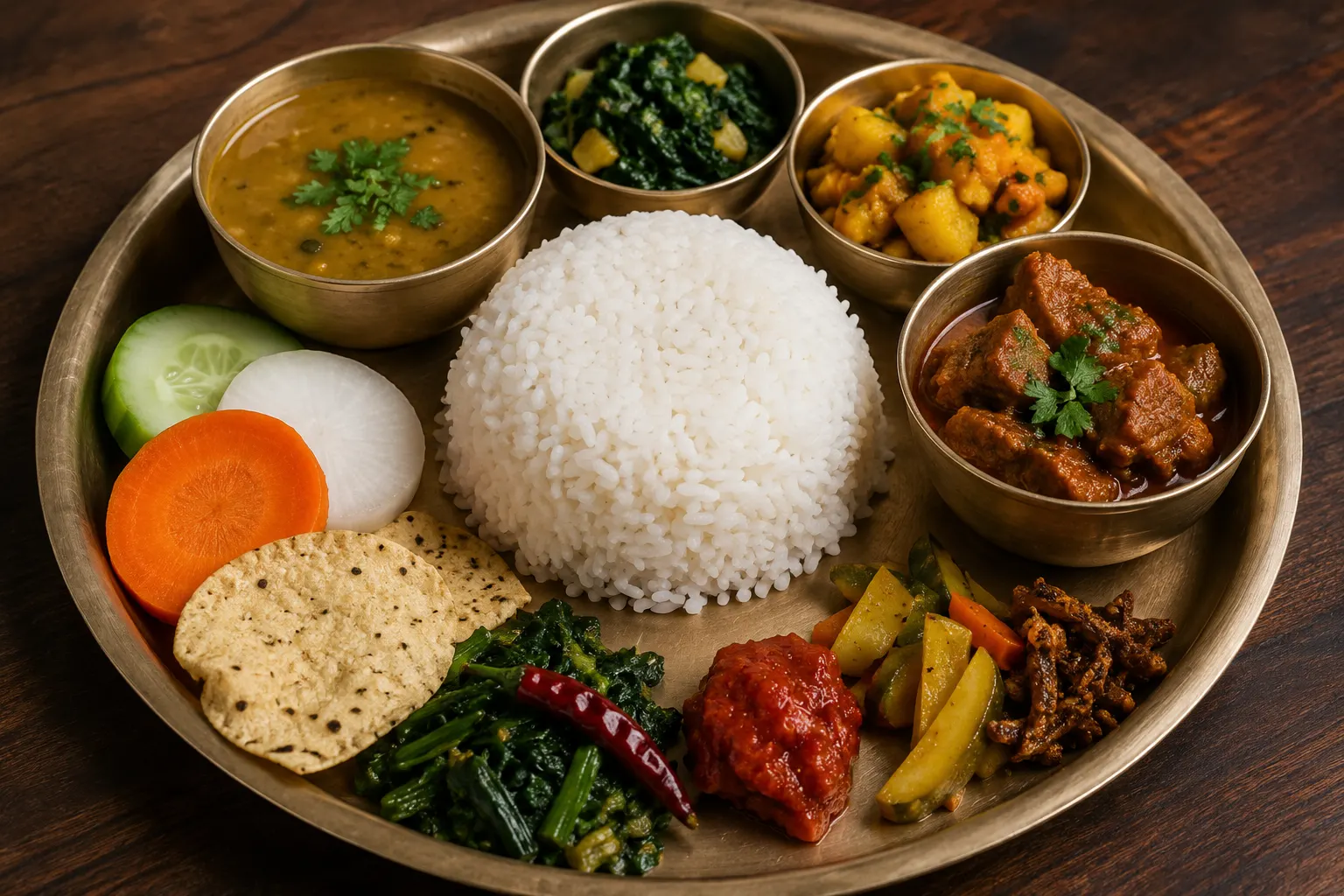
A traditional Dal Bhat set may also include seasonal greens, curry, yogurt, papad, and meat such as chicken, mutton, or buffalo. The Thakali Set, inspired by the food traditions of the Thakali community, is especially popular with travelers and is known for its variety of carefully prepared accompaniments.
For trekkers, Dal Bhat is more than just a traditional meal, it is a reliable source of energy after a long day on the trail. It is filling, comforting, and often available for additional servings.
You may even hear the famous trekking phrase:
“Dal Bhat Power, 24 Hour!”
After several hours of walking through the Himalayas, you may understand exactly why.
Where to try it: Kathmandu, Pokhara, traditional Nepali and Thakali restaurants, local eateries, and mountain lodges throughout Nepal.
2. Momo | Nepal's Favorite Dumpling
You haven't really experienced Nepal until you've tried momo.
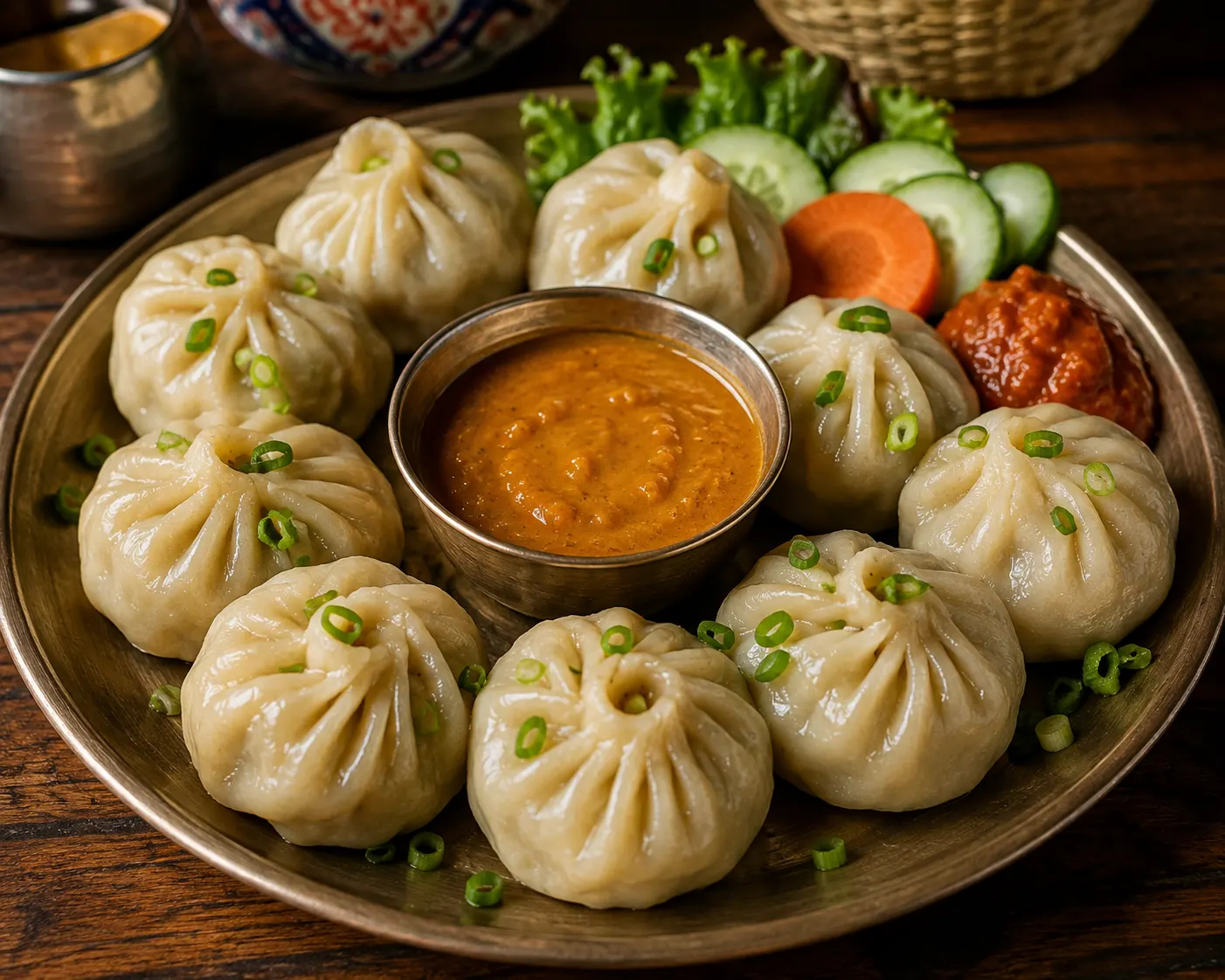
These small dumplings are filled with vegetables or meat and can be steamed, fried, or prepared in different regional styles. They are usually served with a flavorful achar or dipping sauce.
Momos are one of Nepal's most popular snacks and can be found almost everywhere, from small local eateries to modern restaurants.
Try different versions during your trip and decide which one becomes your favorite.
Traveler tip: Don't be afraid to ask for a less-spicy achar if you are not used to chili.
3. Newari Samay Baji | A Feast of Kathmandu Valley
For a deeper taste of Nepal's cultural diversity, try Newari cuisine.
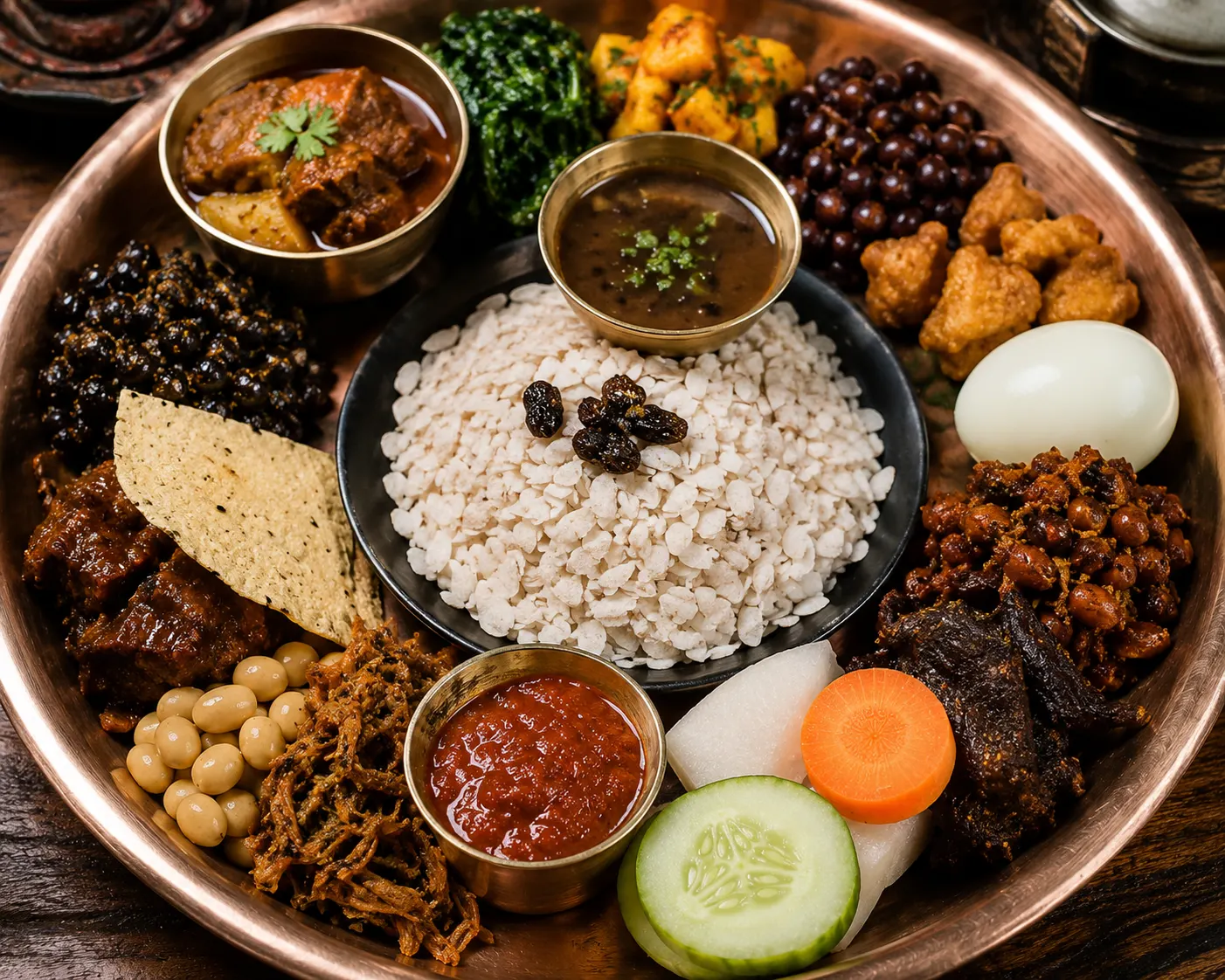
The Newar community of the Kathmandu Valley has developed one of Nepal's richest culinary traditions. A traditional Samay Baji platter can include beaten rice, choila, beans, pickles, eggs, vegetables, and other flavorful accompaniments.
It is not simply a meal, it is part of Newari cultural life and celebrations.
The Kathmandu Valley is particularly good for food travelers, with traditional Newari restaurants and eateries throughout Kathmandu, Patan, Bhaktapur, and Kirtipur. Nepal Tourism Board also highlights the Valley as a major destination for experiencing traditional Newari and Thakali cuisine.
4. Sel Roti | Nepal's Traditional Ring-Shaped Bread
Have you ever tasted a crispy rice-flour bread shaped like a ring?
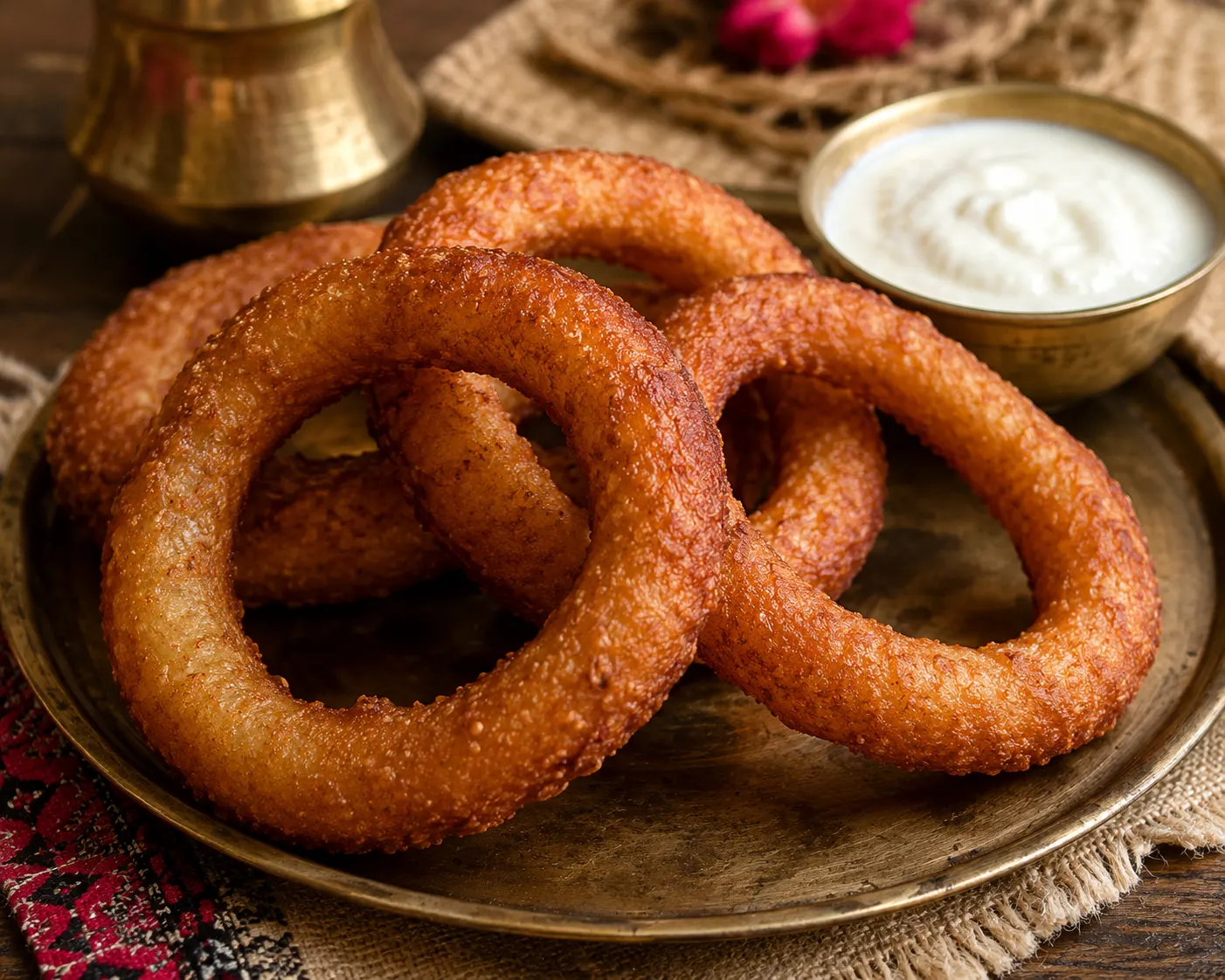
Sel Roti is one of Nepal's most recognizable traditional foods.
It has a crispy outside and soft, slightly sweet inside and is traditionally associated with festivals such as Tihar and Dashain. It is particularly enjoyable when freshly prepared and served with yogurt or other accompaniments.
For many Nepalis, the smell of freshly cooked sel roti is closely connected with festivals, family gatherings, and childhood memories.
Best time to try it: During festivals, local markets, or traditional eateries.
5. Thukpa, Syakpa | Warm Your Soul in the Himalayas
When the mountain air turns cold, few meals feel more comforting than a steaming bowl of Thukpa or Syakpa. These hearty Himalayan dishes are especially popular in the colder regions of Nepal and are perfect after a long day of trekking.
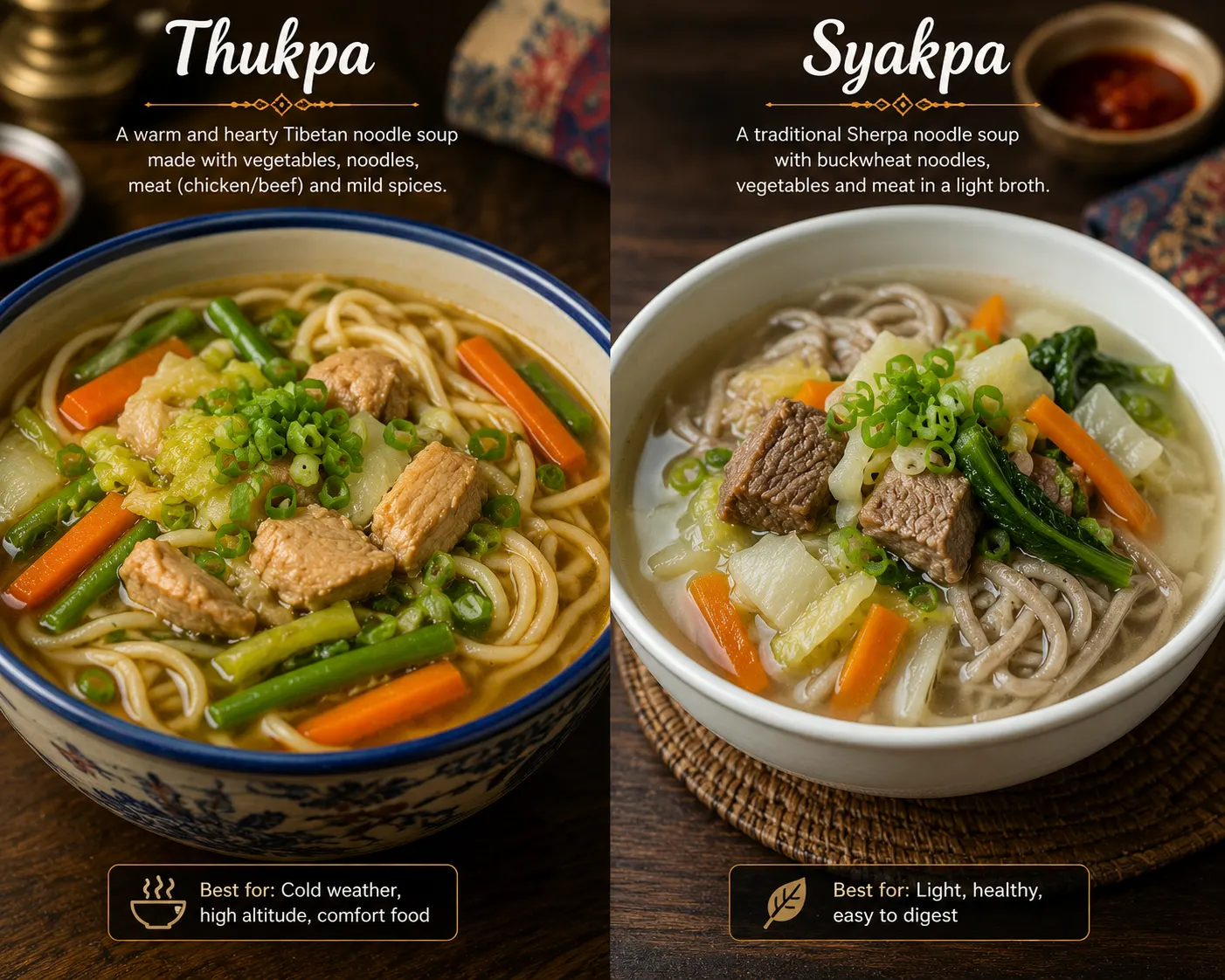
Thukpa is a flavorful noodle soup with a warm broth, noodles, vegetables, and often meat. Influenced by Tibetan Himalayan cuisine, it has become a much-loved comfort food throughout Nepal, particularly in mountain communities.
Syakpa, another traditional Himalayan noodle dish, is often prepared with handmade noodles, vegetables, and meat in a lighter, warming broth. Its simple ingredients and nourishing character make it a popular meal in high-altitude communities.
You can enjoy Thukpa and Syakpa in Kathmandu and Pokhara, as well as in Himalayan towns and trekking areas. Sitting inside a cozy mountain lodge with a hot bowl of noodles while snow or cold winds surround you is an experience that is very much part of Himalayan travel.
Best moment to try them: After a chilly day of trekking, when all you want is something hot, hearty, and comforting.
Taste the Himalayas, one warm bowl at a time.
6. Choila | A Newari Favorite
For travelers who enjoy bold flavors, choila is worth trying.
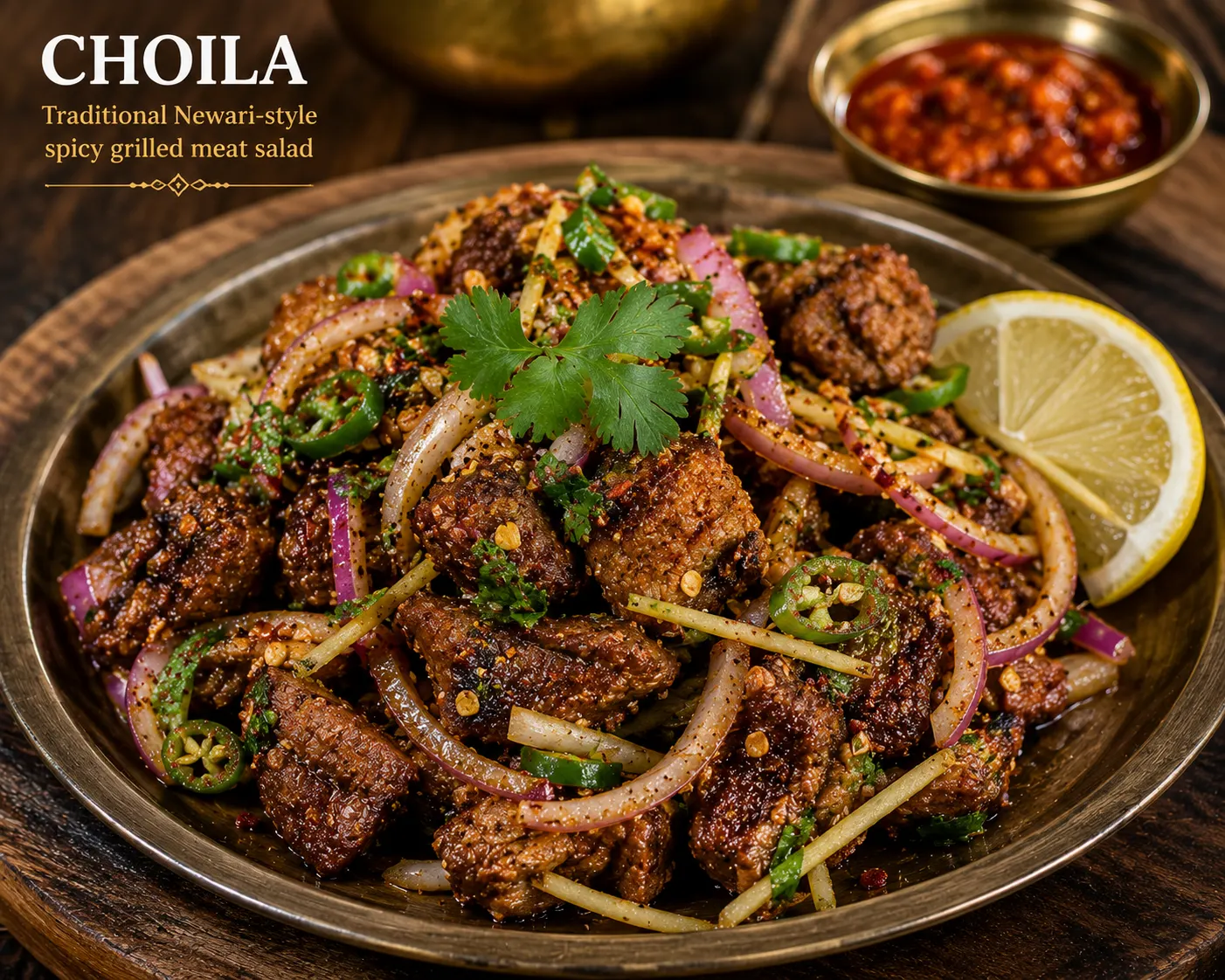
Traditionally prepared with grilled or smoked buffalo meat and seasoned with spices, garlic, chili, and other ingredients, choila is an important part of Newari food culture.
It is commonly served alongside other Newari dishes and is particularly enjoyable when sharing a meal with friends or fellow travelers.
If you're exploring the food scene around Patan, Bhaktapur, Kirtipur, or Kathmandu, look for a traditional Newari restaurant.
7. Dhido & Gundruk | Traditional Hill Food
If you want to move beyond the foods most commonly found on tourist menus, try dhido and gundruk.
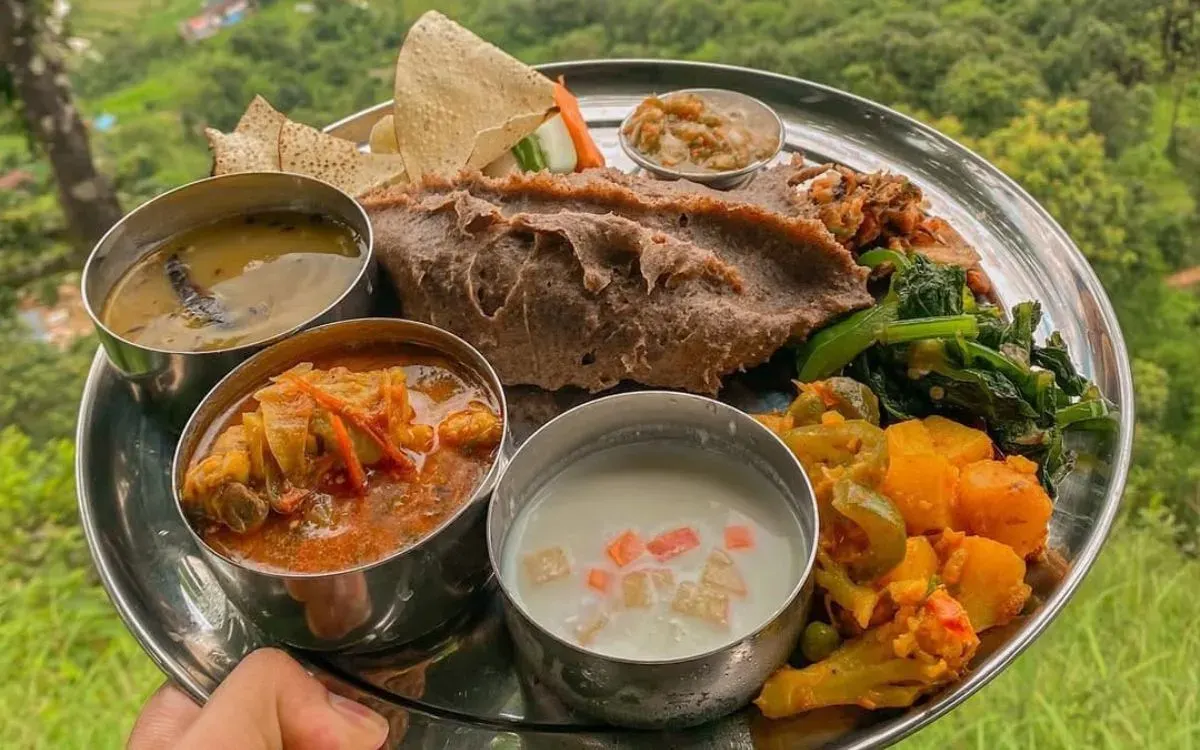
Dhido is a thick traditional porridge made from flour such as millet or buckwheat, while gundruk is fermented leafy green vegetables.
This combination represents an older style of Nepalese hill cuisine and offers a very different taste from rice-based meals.
It is particularly interesting for travelers who want to experience traditional rural Nepali food rather than modern adaptations.
8. Yomari | A Sweet Taste of Newari Tradition
For dessert, look for yomari.
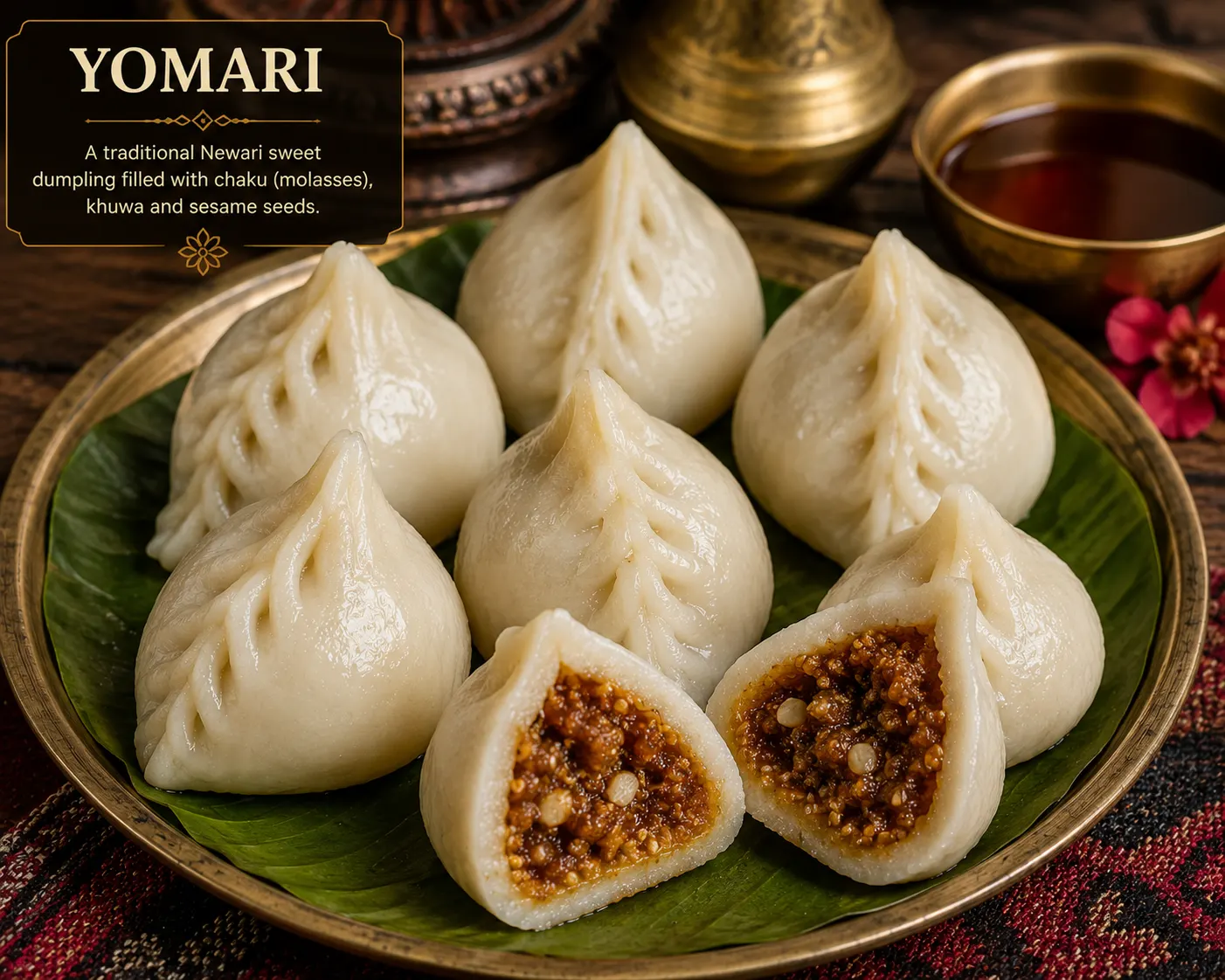
Yomari is a steamed rice-flour dumpling traditionally filled with chaku (molasses), khuwa, and sesame, and it has a special place in Newari culture. It is especially associated with Yomari Punhi, an important Newari festival.
Its distinctive shape and sweet filling make it both delicious and memorable.
Best place to try it: Kathmandu Valley, especially during the Yomari season and at traditional Newari eateries.
9. Juju Dhau | The King of Yogurt
If your Nepal journey takes you to Bhaktapur, don't leave without trying Juju Dhau.
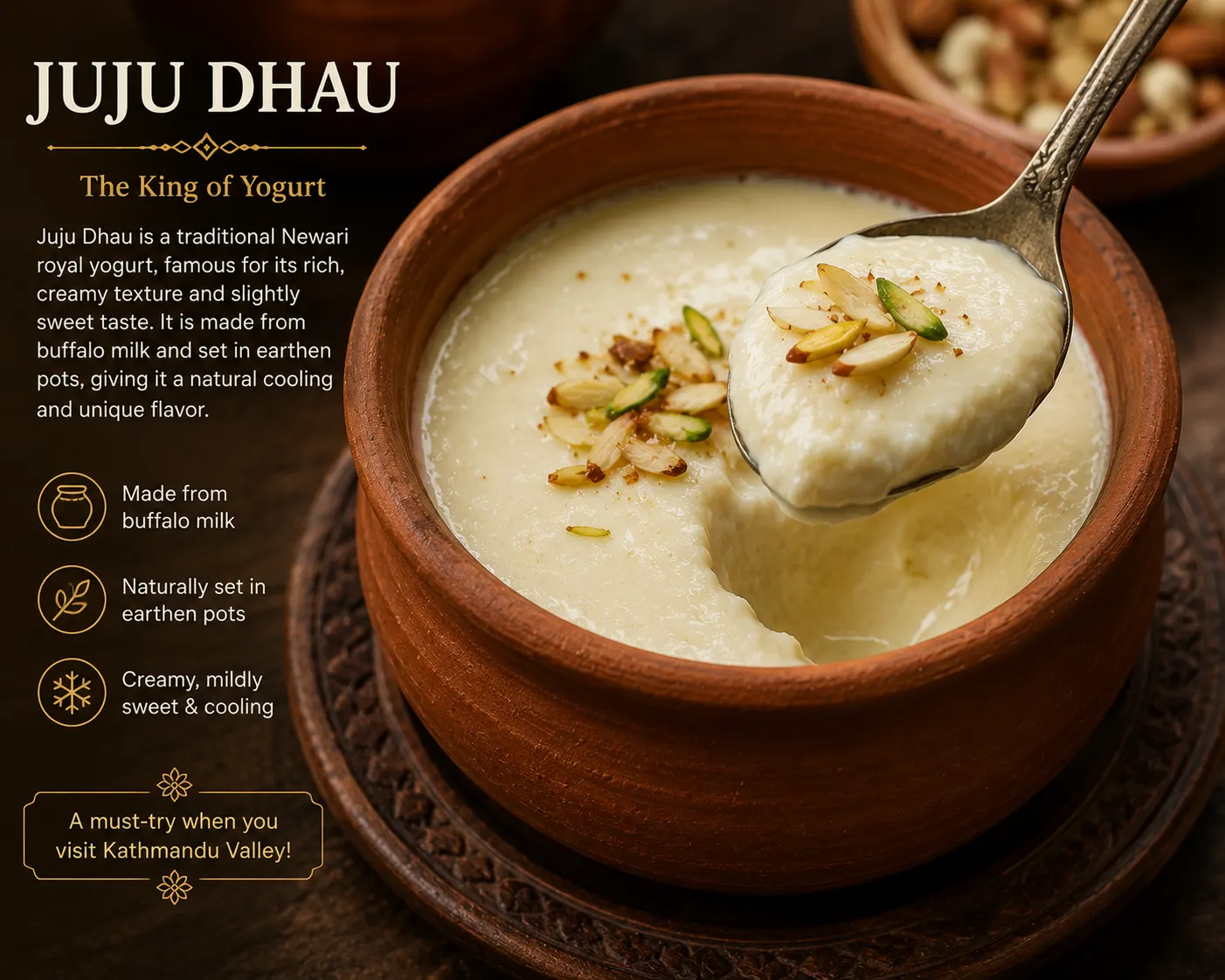
This rich, creamy buffalo-milk yogurt is one of Bhaktapur's famous traditional foods. Served in traditional clay pots, it makes a refreshing ending to a meal or a simple snack while exploring the historic city.
Pair it with a walk through Bhaktapur's old streets, temples, and courtyards, and you have a perfect cultural experience.
Don't Just Eat in Nepal, Eat Like a Traveler
One of the best things about eating in Nepal is that you don't always need to find an expensive restaurant.
Try a traditional khana ghar, sit down in a local Newari restaurant, order momos from a busy neighborhood shop, enjoy dal bhat at a mountain lodge, or taste sel roti from a local market.
Kathmandu offers everything from traditional Nepali and Newari food to international cuisine, while places such as Thamel, Patan, Kirtipur, and other parts of the Kathmandu Valley provide plenty of opportunities to explore local food culture.
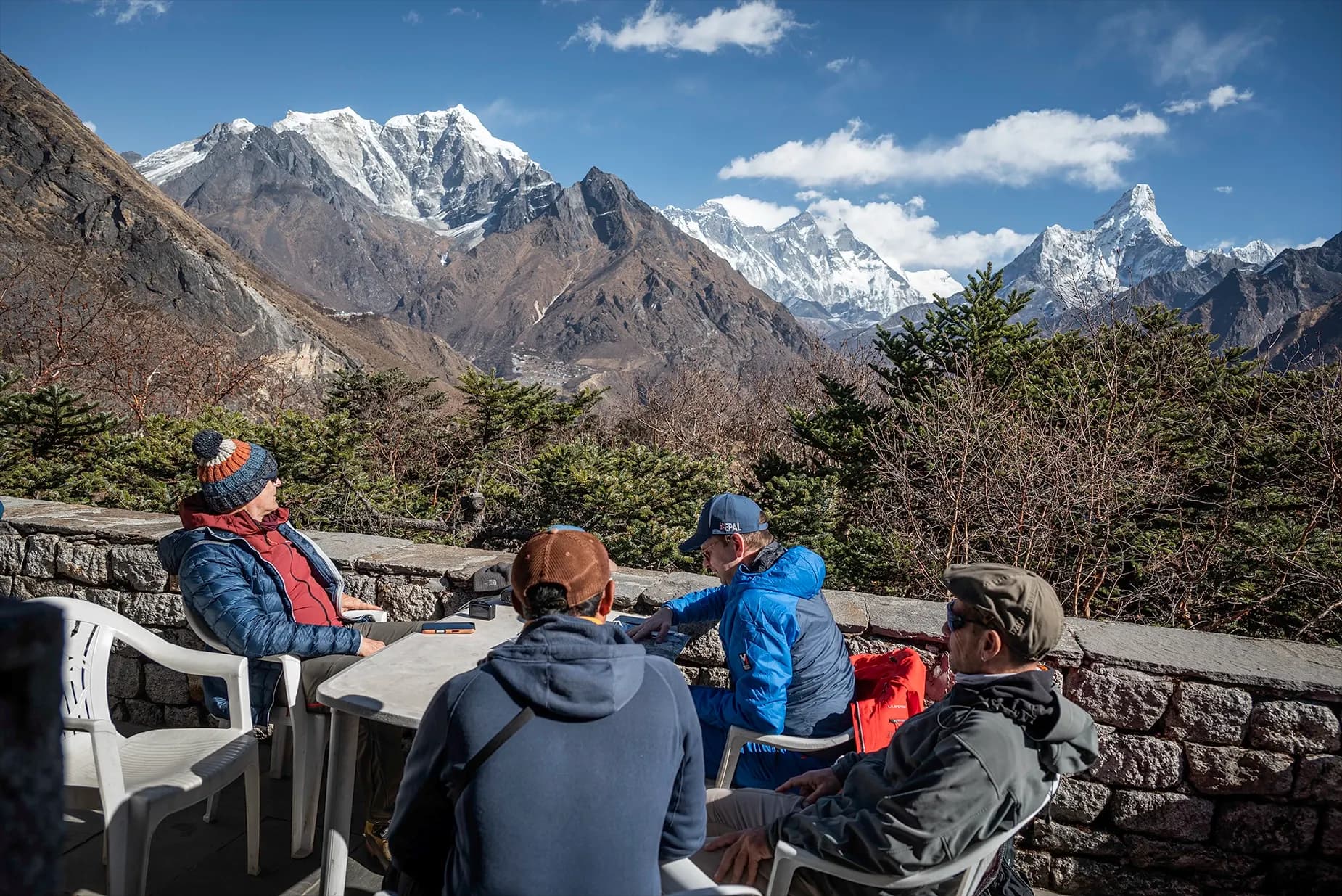
And if you're trekking, don't overlook the food served in the mountains. A simple meal eaten beside a warm stove after several hours of walking can become one of the most memorable meals of your entire trip.
A Few Things Travelers Should Know
Nepali food can be spicy, although restaurants catering to international travelers can usually adjust the level of chili.
Vegetarian food is also widely available. Dal bhat, vegetable momos, thukpa, tarkari, and many other dishes can be prepared without meat.
If you eat with your hands, remember that the right hand is traditionally used for eating in Nepal. Using a spoon or fork is also completely normal in tourist restaurants.
Most importantly, ask questions. Local people are usually happy to explain what a dish contains and how it is traditionally eaten.
Taste Nepal Beyond the Mountains
Nepal is often introduced to travelers through Mount Everest, Annapurna, Langtang, ancient temples, and Himalayan trekking. But there is another Nepal waiting to be discovered around the dining table.
It is found in the warmth of dal bhat, the spice of achar, the comfort of momos, the sweetness of yomari, the richness of Newari cuisine, and the simple pleasure of sharing food with local people.
So when you visit Nepal, don't make your journey only about where you go.
Make it about what you taste, who you share it with, and the stories you take home.
Come for the Himalayas. Stay for the culture. Taste the real Nepal.
Community Trek - Explore, Connect & Expereince.